

The Most Underrated Phrase in Executive Leadership
Nearly half of all employees experience severe anxiety before routine 1:1 meetings due to a lack of communication from their leaders. Managers can instantly eliminate this anxiety and build deep trust by deploying the phrase “and here’s why”—guaranteeing immediate context is provided alongside all constructive and positive feedback.
How can managers reduce employee anxiety during 1:1 meetings?
Nearly half of all employees experience severe anxiety before routine 1:1 meetings due to a lack of communication from their leaders. Managers can instantly eliminate this anxiety and build deep trust by deploying the phrase “and here’s why”—guaranteeing immediate context is provided alongside all constructive and positive feedback.
The most important relationship in an organization is between the manager and the employee. This relationship ultimately makes up a large majority of one’s employee experience. Think about your career and the experiences you had. A lot of those memories come down to how someone managed you.
My experiences with my direct managers throughout my PR career are the primary memories – good, bad, or indifferent - at those companies.
Today’s evolved work environment has changed how these relationships are built. I was fortunate to meet every manager in person throughout my career. In today’s era, that might not be the case. Employees may spend their entire time at a company never meeting their manager in person.
It’s a significant shift in how we build trust and rapport and deliver feedback.
Leaders in recent years have been focusing on improving the value of 1:1 meetings, including the frequency and length.
However, we also need to address uncertainty. Recent data suggests people are nervous about talking to their managers. In a study by Humu, 49 percent of employees feel anxious before 1:1 meetings with their manager.
One way to alleviate the stress is to focus the meetings as less transactional (e.g., status reports) and more constructive and conversational (e.g., quality of work).
A constructive and conversational approach to 1:1 meetings is essential during difficult conversations.
One example: think about times throughout your career you received harsh feedback. Examples might include:
- “We’re taking you off the account.”
- “I had to rewrite your plan.”
- “You’re not getting promoted yet.”
Throughout my career, I’ve heard stories about people’s heightened stress and anxiety levels, not just because of the content of the feedback but even more so the lack of context.
This is why we need to consider using the most underrated phrase in leadership:
“And here’s why.”
When delivering a difficult message, include the context.
- “We’re taking you off the account, and here’s why…”
- “I had to rewrite your plan, and here’s why…”
- “You’re not getting promoted yet, and here’s why...”
This is essential when giving positive feedback as well.
- “We’re giving you a bonus, and here’s why…”
- “Here’s an extra-paid day off. Thank you for your work, and here’s why…”
- “We’re giving three months additional fully-paid parental leave, and here’s why…”
Evolving your 1:1 conversations and taking a few extra moments to share context will reap enormous rewards for those you manage, ultimately making you a more respected and impactful leader your employees will want to emulate.
Speaking of taking a few extra moments: I think you are all fantastic PR leaders and trusted advisors, and here’s why: with little fanfare, you are helping to build essential relationships to support the missions of companies and organizations you care about. You’re doing so often understaffed, under-supported, and under pressure with constant challenges from leadership who constantly ask to show your value. I know your worth. I see your worth. Thank you for all you do!

5 Leadership Communication Strategies That Boost Employee Well-Being
Employees who perceive their leadership as transparent boast a 12x higher job satisfaction rate. By dramatically increasing communication frequency, cutting jargon, and keeping updates under 100 words, leaders drastically reduce workforce anxiety and build systemic psychological safety.
How does executive communication impact employee mental health?
Employees who perceive their leadership as transparent boast a 12x higher job satisfaction rate. By dramatically increasing communication frequency, cutting jargon, and keeping updates under 100 words, leaders drastically reduce workforce anxiety and build systemic psychological safety.
Data shows employees who perceive their companies as transparent have 12x greater job satisfaction than those with the opposite perception. And greater job satisfaction impacts overall well-being.
But what do companies need to share with employees? Recent survey data from Axios of more than 1,000 people about workplace communications suggests employees want to see leaders send more thoughtful and insightful details, with more frequency and consistency.
Here are five practical and actionable ways for leaders to help reduce stress and anxiety across your organization.
1) First, ask your employees how they like receiving information. Some employees may not have access to a computer all day, so how will you reach them? Does your company centralize its employee communications, and if so, to what effect are your employees accessing those channels?
2) Emphasize the impact of information sharing. Often, we are the translators between executives and employees. Your C-suite is thinking one quarter and yet 3-5 years ahead. They are constantly speaking with customers, other industry leaders, and members of the public sector, all while ensuring the right balance between the needs of their employees and meeting the business objectives. This knowledge can ultimately benefit employees, which will help the company. To start, ask for 15 minutes once a month with your executives as part of a story-mining session to learn the three most insightful things they have learned.
3) Be more frequent. If your executives are going months without meeting with their employees, the perception is that there is something to hide. Increase the frequency and start small. If your executives meet with employees quarterly, recommend expanding to twice per quarter.
4) Communicate shorter, jargon-free, and impactful. Help your executives practice keeping their messages tight and understandable. Our role is to help them use words to communicate so employees understand, not impress with unnecessary vocabulary. For emails or newsletters, research suggests keeping them between 75 and 100 words. Will your audience understand your message within seconds? That’s the test!
5) Be more consistent. The more consistent executives share their messages with their employees, the better. This includes the communication style and channels your executives will use. And executives shouldn’t be afraid to repeat and reinforce their message.
Finally, measure the impact regularly and share the results with your leaders.
Changes will take time and require trial and error to find a solid rhythm. But just like the rhythms you create for your external publics, we also address them for our internal publics. These recommendations are examples, but a tailored communication strategy – backed with first-party data - will bode well for the relationship between leadership and its employees.

"Return to What?": Why Generic RTO Mandates Are Failing
Blanket "return to office" mandates immediately fail when employees commute just to conduct video calls in empty rooms. To preserve talent and protect well-being, leaders must explicitly define the office as a hub for collaborative learning and deep mentorship, while reserving home working hours exclusively for focused, heads-down execution.
How should leaders structure "Return to Office" policies to retain talent?
Blanket "return to office" mandates immediately fail when employees commute just to conduct video calls in empty rooms. To preserve talent and protect well-being, leaders must explicitly define the office as a hub for collaborative learning and deep mentorship, while reserving home working hours exclusively for focused, heads-down execution.
Every day I chat with someone about an update to their company’s return to office policy. I typically hear one of three statements:
- “We’re supposed to go into the office three days per week, but it’s not enforced.”
- “I go into the office, and there’s no one else there. It’s a waste of my time. I spend two hours a day commuting. Why am I here?”
- “We all go into the office, but all we do is stare at our computers and work. I don’t even work with anyone in my office!”
And here lies the problem with “return to office.”
We haven’t defined “return” and “office” in the current and future state of work. Business leaders: my call to action is to define these two words for your company and discuss them with your employees before implementing a return-to-office policy.
Let’s take a step back. I chat with a wide range of members of the public relations industry: from agency account executives and in-house PR managers to CCOs and agency CEOs.
To a T, learning on-the-job is a significant issue. New professionals are eager to learn, and business leaders want their employees to learn faster.
The value of learning from others in an in-person environment is immeasurable.
The problem, however, is twofold:
- Employees have made significant adjustments to their personal life while working full-time from home, from moving to another city to childcare. According to research from HR software company Gusto, “48% of workers said that the ability to work from home some or all of the time would be a major or the most important factor in determining whether to accept a job offer in the future.” Companies, are you listening?
- When companies send out corporate-wide policies saying, “we need everyone in three times per week,” they haven’t explained why and how it will be a different (and positive) employee experience.
Every company needs to answer two questions:
How are we defining “return”? Be as specific as possible. “Come in twice per week” does little for your employees. What activities are we prioritizing for our employees while in the office? If your team comes into the office and all they do is sit at their desk conducting video calls, that’s not a great use of their time. Get granular if you want your team to come in twice per week. One example: “From 10:00-3:00 on Tuesdays and Thursdays, please be in the office to discuss news trends, conduct brainstorms, and host actionable in-person meetings with your teams. Otherwise, continue working from home for the rest of the week.”
What activities should employees prioritize at home? Save your meetings and brainstorms to in-person discussions and spend time at home on your day-to-day heads down activities – writing, pitching, planning, research, and other activities requiring focus and concentration. Please encourage your teams to set boundaries while at home. Another issue I hear is that because it’s easier to start working, people working from home work longer hours, which causes burnout. Set boundaries with your team and stick with them, especially on nights and weekends.
In short:
- When in the office, prioritize learning and leadership time.
- When at home, prioritize deadlines and to-do lists.
Finally, listen to your employees. Conduct quantitative and qualitative research before implementing a policy. It will save you and your employees time and money.
The faster we can answer “return to what?” the better it is for companies and the well-being of their employees.

Strengthening the Essential Partnership Between PR and HR
Replacing a burned-out employee costs up to four times their salary. Public relations leaders must forge a strategic alliance with Human Resources to effectively communicate internal mental health benefits, leverage Employee Resource Groups (ERGs), and tangibly boost organizational retention.
Why must public relations leaders partner closely with Human Resources?
Replacing a burned-out employee costs up to four times their salary. Public relations leaders must forge a strategic alliance with Human Resources to effectively communicate internal mental health benefits, leverage Employee Resource Groups (ERGs), and tangibly boost organizational retention.
If you take care of your people, you will make more money. And It’s also the right thing to do.
According to the Society of Human Resource Management (SHRM), replacing an employee can cost three to four times the employee’s salary. Recent data from McKinsey states workplace flexibility and support for employee health and well-being are drivers in employee retention.
Employees’ experience at their company needs to be designed with their career, emotional, financial, mental, and physical well-being in mind. Let’s look closer at mental health benefits. Data from Gallup says 57 percent of U.S. workers cannot confirm the existence of easily accessible mental health support services in their workplace.
These key challenges can be solved by utilizing skills within our profession. Our strategic communications and relationship-building skills, traditionally used for external purposes, have increasingly been used for internal publics. PRSA has an entire section dedicated to this group!
We have an opportunity to work closely with our human resources counterparts to ensure people understand how to access the mental health resources and other benefits the company has designed.
Here are some ways public relations leaders can play a role.
- Understand how business decision-makers are influenced. The C-suite and their respective board of directors want to know how employee well-being programs will impact the company’s reputation and financial impact. If a well-run program can save the company 10x in turnover and health insurance costs, they will be more likely to say yes to new initiatives.
- Be aware of all the benefits your company offers. For example, even if you’re not a parent, are you still aware of the benefits for parents your company provides? How might your research impact a 1:1 conversation with someone you manage who is a parent or is expecting? Studies show we make buying decisions based on trusted family, friends, and colleagues. Does your company offer a new meditation app, therapy, or other services for mental health? Test out the benefit and try out the user experience. Even if you don’t use the service long-term, someone on your team or a trusted colleague might be interested in your feedback.
- Participate in employee resource groups, voluntary, employee-led groups to nurture a diverse, inclusive workplace aligned with the organization. These groups are great ways to connect with others outside your immediate work stream. They are also groups often empowered to share thoughts and ideas with business decision-makers on benefits available to the company.
- Share feedback with Human Resources. HR teams work tirelessly and thanklessly to source and select the right benefits based on their employees’ feedback. If you have feedback on behalf of yourself or your team, deliver it promptly to your HR team.
Our relationship with human resources has never been more important, nor has it had as much potential to advance our profession. I look forward to witnessing how these relationships evolve in the coming years.
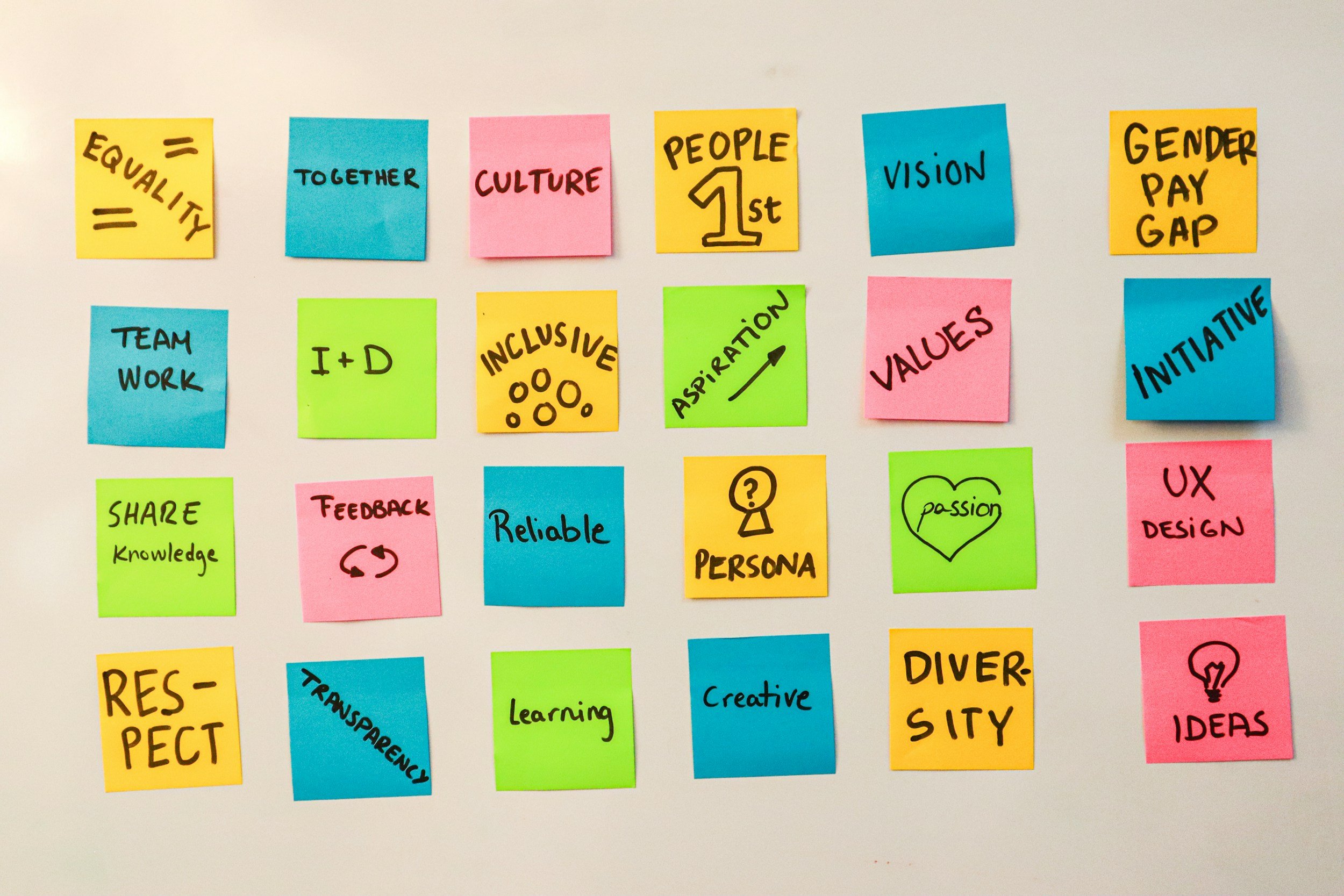
Why Living Your Core Values Prevents Professional Burnout
When employees feel their organization actively embodies its stated values, they have significantly higher engagement scores and are 23% more likely to stay long-term. To prevent burnout in high-stress service industries, professionals must ensure their personal values explicitly align with their employer's boundaries and expectations.How do company values impact employee retention?
When employees feel their organization actively embodies its stated values, they have significantly higher engagement scores and are 23% more likely to stay long-term. To prevent burnout in high-stress service industries, professionals must ensure their personal values explicitly align with their employer's boundaries and expectations.
We can safely say the well-being of the PR professional has been a volatile experience since March 2020. After three years of evolving relationships between employees and employers, it’s time to focus on strategies centering on stability. My 2023 call to action for you is to define, communicate, and live your values to ensure your well-being is front and center. Values are “the fundamental beliefs that guide and motivate our behavior and choices of what is important in life.” Brand-new employee experience data from Qualtrics says, “When employees feel their organization embodies these values, they’re 27% more likely to have higher engagement scores, and 23% more likely to stay working for more than three years.” The more your employees understand and embrace their values, the better they will perform for you. And the better they perform for you, the more money your company will make. Additional data from the same Qualtrics report says, “Globally, 63% of those who rate their work-life balance highly are willing to go above and beyond for their organizations.” Public relations is a service industry. It can sometimes require the beyond 9-5 Monday-Friday experience. However, we must set boundaries as the DEFAULT rather than the EXCEPTION. I encourage every public relations professional to spend this month doing the following: 1. Understand the values of your employer. Ask your manager or other leaders how they identify with or live those values. If you run your own company, review and refresh your values. 2. Understand how your personal values align with your company’s values. You should avoid working at companies whose values interfere with what is important to you! 3. Identify three things for your well-being to focus on this year in alignment with those values. Examples include hiring a financial planner, volunteering for a professional association, or blocking an hour out of every day for exercise. 4. Assess how your company’s values are consistently and strategically communicated at your workplace. For example, include them at the top of every internal meeting agenda, or reference them when praising others (directs, peers, and bosses) for outstanding work and how they tie to those values. 5. Encourage your employees to share examples of how they used your company’s values to improve their well-being. For instance: Chasing the Sun’s values are respect for time, transparency, and professionalism. If a Chasing the Sun employee told me this month they preplanned their entire 2023 paid time off schedule (as I used to do during my career), I might give them a spot bonus for prioritizing their well-being. Let’s look to 2023 as an empowering force for us to focus on living our values. Because when that happens, we can truly advance the PR profession and you as a world-class professional. I look forward to following along on your respective journeys.