You Keep Everyone Else’s Story Straight. Mark Helps You Prioritize Your Story.
Mark helps companies build healthy, confident, and connected PR, communication, and marketing teams.
Trusted By The Most Influential Organizations In the Industry
“Partnering with Mark is an asset for any company looking for a strategic employee well-being partner to reduce turnover and help meet their business objectives.”
— Kim Sample, CEO, PR Council
About Mark
-
A former communication executive who led award-winning teams and strategy for global brands like Microsoft, Adobe, and Amazon, and who has naturally lost and kept off 150 pounds over 15 years, Mark Mohammadpour combines Fortune 50 leadership experience with certified health coaching expertise.
-
Mark comes from inside the communication world; he spent years as an executive at Edelman and Weber Shandwick, leading award-winning campaigns for global brands.
He is a PRSA Fellow and APR, which means when he walks into a room of PR and comms professionals, he’s not an outsider explaining their world back to them. Instead, Mark’s a colleague who’s been in the same pressure-cooker environments, managed the same impossible client expectations, and lived through the same cycles of always-on culture that make this industry as challenging as it is rewarding.
-
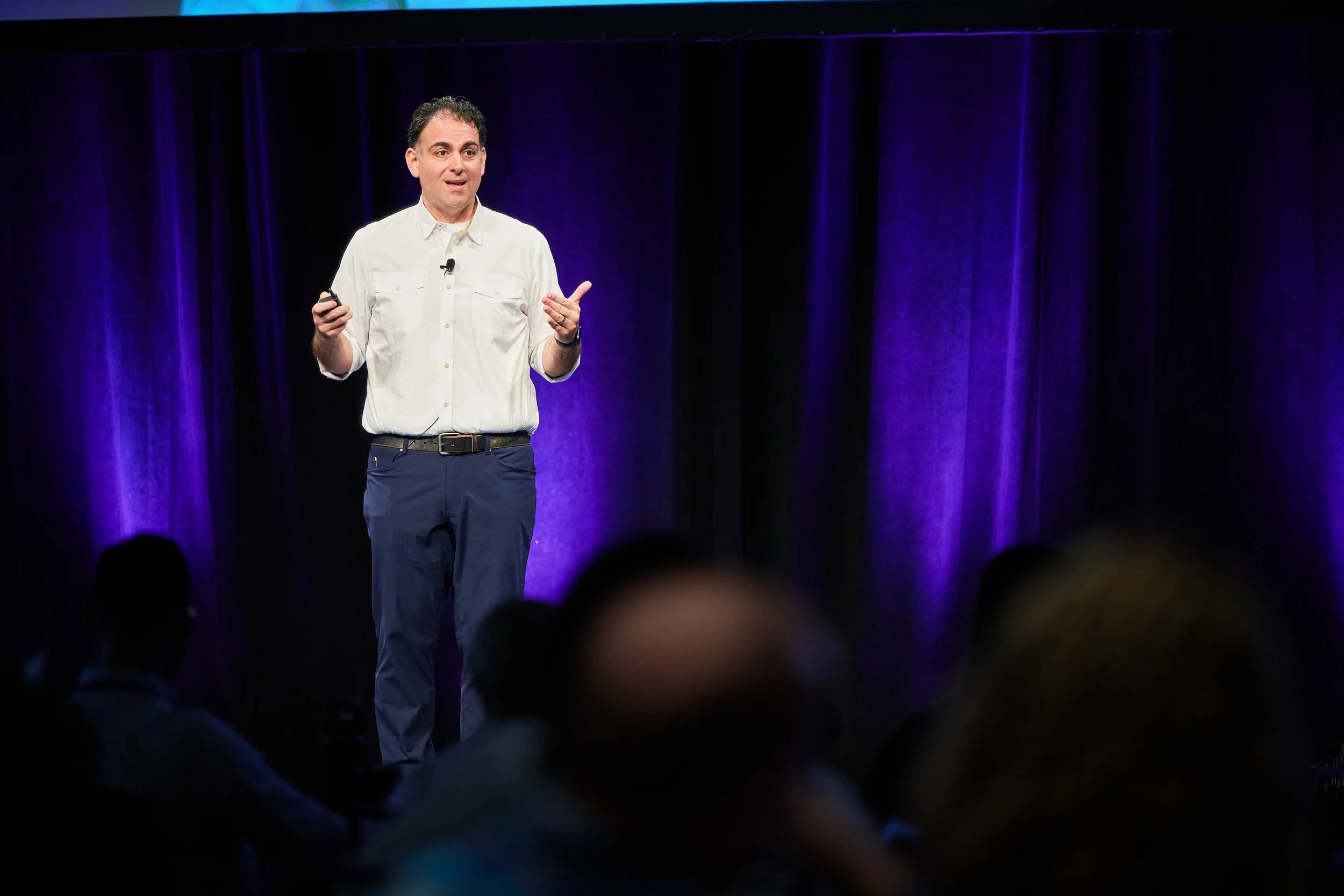
His Keynote Conversations blend full attendee engagement, actionable insights, and current research. Today, his most requested topics, Leading with Empathy, The Buoyant Leader, and Lead a Culture of Well-being, are built around one conviction: healthy employees are your greatest competitive advantage.
Who We Help
-
The Goal: Reducing client and employee burnout.
The Result: Growing client relationships and budgets, and a reduction in team turnover.
-
The Goal: Breaking down silos and leading with empathy during crises.
The Result: Improved cross-functional trust and a culture that attracts top talent.
-
The Goal: Providing high-value, "sticky" leadership tools for your members.
The Result: Increased member loyalty and high-impact conference programming.
What We Address
-
We address a profession that’s been undervalued and misunderstood for decades.
-
Practitioners who are tired of being “the spin team” in the org chart.
-
Young talent leaving the field before they’ve seen what it can be.
The CHASE Model™: Create A Culture Operating System
We ensure your cultural shift is permanent. By integrating The CHASE Model™ into your daily workflow, you create a sustainable ‘Culture OS’ that drives retention and performance. This is where your investment pays off—with a team that is not just healthier, but significantly more productive and connected to your mission.
-
We begin by looking past the symptoms of burnout and turnover to identify the underlying friction. Using data-driven insights and team pulse surveys, we pinpoint the specific communication gaps and well-being hurdles that are currently preventing your business from "soaring." We don't just address the "what"; we uncover the "why."
Using The CHASE Model™, Mark shows how managers and directors can rebuild their leadership approach around capacity rather than compliance, and why the back-office culture is the product your guests experience at the front desk.
Through research, real stories, and interactive moments, your leaders leave with a practical playbook for building a team that shows up consistently and stays.
-
In every high-performing organization, your employees are the heroes of the story. We focus on the human beings behind the titles; the people driving your innovation and serving your clients. By shifting the perspective to see every team member as a vital contributor to a healthy culture, we foster the "Buoyant Leadership" mindset required to navigate high-pressure corporate environments.
-
This is where the Keynote Conversation or Offsite Experience takes center stage. We move beyond “passive listening” into “active participation.” Through live simulations, real-time polling, and empathy-based training, your team practices the exact communication and well-being skills they need to implement the very next day.
-
Change only sticks when it’s integrated into the workflow. We co-create a written Team Charter and deploy the Team Culture OS™—a customized leadership operating system designed to fit into your existing daily routines. This isn’t a one-and-done event; it’s the blueprint for how your team will communicate, collaborate, and support one another moving forward.
-
What gets measured gets managed. We close the loop with a 30/60/90-day accountability plan and post-event "Health Checks." By tracking attendee engagement metrics and following up on specific culture-growth milestones, we ensure your investment yields a tangible return—both in team morale and the bottom-line performance of your "wealthy team."
Keynote Conversation Topics
Lead A Healthy Culture Of Well-Being
How the Best Communication Teams Make Well-Being the Way They Work. Communication teams spend their careers protecting other organizations’ cultures. The ones with the lowest turnover and highest creative output have figured out that the healthiest culture in the room is the one they’ve built for themselves.
-
In Lead a Healthy Culture of Well-Being, PR and communication leaders learn why the agencies and in-house teams with the strongest creative output haven’t redesigned their productivity systems; they’ve redesigned how they lead.
Using The CHASE Model™, Mark shows how everyday leadership decisions in a communications environment, how you debrief after a crisis, how you onboard a new team member in an always-on culture, and how you protect your team’s thinking time can either protect or erode your team’s collective well-being.
In an industry where burnout is the leading cause of talent loss, culture is your agency’s most valuable asset. Your leaders leave with a practical framework for starting to build it.
-
According to Deloitte’s Well-Being at Work Report, 52% of employees say their employer doesn’t support their well-being meaningfully. In PR and communication, where always-on expectations are the industry norm, that gap poses a talent and creative-quality risk.
-
Reimagine well-being as a creative strategy, directly connected to the quality of communications work your team produces.
See how daily leadership choices compound into the culture your best communicators either stay in or leave for a competitor.
Treat energy, psychological safety, and connection as measurable outputs, not soft-skill aspirations.
Adapt The CHASE Model™ to communication moments: post-crisis debriefs, pitch team preparation, account onboarding, and recognition that counters always-on culture.
Leave with a simple, repeatable framework to track team well-being and start using it the same week.
The Buoyant Leader: Healthy Under Pressure
Why the Most Grounded Communication Leaders Soar. PR and communication professionals are trained to stay calm in a crisis…for their clients. The most effective leaders in this industry have learned to apply that same steadiness to leading their own teams under pressure.
-
The Buoyant Leader gives communication leaders a practical framework for leading effectively in one of the most high-pressure, emotionally demanding industries in business.
Blending neuroscience, personal transformation, and humor, Mark reframes resilience, not as toughness, but as the practiced ability to stay grounded when the news cycle turns and the client is calling.
In an industry where your team’s judgment under pressure is your product, calm is your competitive advantage. Your leaders leave grounded, with moves they can use before the next crisis brief hits their phone.
-
According to the American Psychological Association’s Work and Well-Being Survey, 77% of workers experience work-related stress and 57% of leaders say it significantly impacts their ability to lead. In communications, where leadership credibility in a crisis shapes your team’s and clients’ outcomes, that gap matters.
-
Build resilience as a daily leadership practice in a high-speed, high-stakes communication environment, not just a post-crisis recovery tool.
Reframe news cycle pressure and client urgency as signals and lead more clearly through both.
Welcome calm as a leadership advantage and understand the neuroscience behind why grounded communicators produce better work under pressure.
See resilience as a team strategy: how a steady communication leader creates the psychological safety that keeps creative teams performing when the stakes are highest.
Leave with specific tools to protect their capacity and lead effectively through the full demands of PR and communication.
Leading With Empathy
Trust is the New Productivity in PR and Communication. Communication professionals know how to build narratives that land with any audience. Empathy as a leadership skill, practiced within the agency or department, is what separates the teams that produce great work from those that produce it until they burn out.
-
In Leading with Empathy, communication leaders experience cognitive empathy in action, not as a messaging framework, but as a leadership skill that transforms how they manage, motivate, and retain the people doing the work.
Through live scenarios, research, and interactive moments, Mark shows how understanding what your team is carrying (the pressure, the perfectionism, the emotional weight of always-on work) makes you a more effective leader and a more trusted partner.
In an industry that teaches empathy to others, it’s time to practice it internally. Your leaders leave with tools they can use the same day.
-
According to Catalyst research, employees with empathetic leaders are three times more engaged, five times more likely to stay, and 61% more innovative. In an industry selling creativity and judgment, that performance advantage is your margin.
-
Understand the science of cognitive empathy and why it’s the most underused leadership tool in PR and communication.
Use perspective-taking to strengthen relationships across account teams, disciplines, and seniority levels.
Reimagine internal trust as the prerequisite for the creative courage your team needs to do their best work.
Apply empathy skills to high-stakes communications moments: difficult client feedback, crisis team dynamics, account transitions, and performance conversations.
Leave with practical tools to build connections and reduce friction across your team, starting today.
REWORK: The Future-Ready Leader
The Playbook for Healthy, High-Trust Leadership in PR and Communication. Communication professionals are experts at managing everyone else’s reputation, crisis, and narrative. The ones burning out fastest are the ones who’ve never learned to apply those same skills to how they lead their own teams.
-
In REWORK: The Future-Ready Leader, PR and communication leaders discover how to bring the same strategic clarity they apply to client communication to how they lead their own people.
Using The CHASE Model™, Mark shows how the most effective communication teams have rebuilt their culture around capacity instead of always-on output, and why protecting your team’s energy isn’t a luxury in an industry that runs on relentless responsiveness.
Through research, real stories, and interactive moments, your leaders leave with a practical playbook for a high-speed, high-stakes communications environment.
-
According to Gallup’s State of the Global Workplace, only 23% of employees are actively engaged. In PR and communication, where your team’s judgment, creativity, and trust are the product, that gap is a direct liability.
-
Rethink what high performance looks like for a communication team, beyond traditional metrics.
Apply The CHASE Model™ to communication moments: onboarding new team members, post-crisis debriefs, and building recognition that offsets the emotional drain of the work.
See culture as the operating system that keeps your best communicators from burning out and walking out.
Understand why protecting your team’s capacity is your most critical risk management strategy, not just an HR concern.
Leave with a shared framework for a high-trust, high-performance communication team that stays engaged through the inevitable next crisis.
Work In Sunlight
Rekindling Belonging and Purpose in PR and Communication. People go into PR and communication because they love the work; the storytelling, the strategy, the way a well-crafted message can change how the world sees something. Somewhere between the client demands, the always-on culture, and the constant pressure to do more, that love gets hard to find. This keynote helps teams find it again.
-
Work in Sunlight is a high-energy, fully interactive Keynote Conversation that helps communications teams at every level reconnect with the purpose behind their work, with each other, and with the craft that brought them into the industry.
Mark shows how belonging in a PR environment is something leaders build deliberately through the daily choices they make about recognizing great work, protecting creative space, and making each person feel seen as an individual, not just a billing unit.
Your team leaves with a Sunlight Map™: a shared, actionable plan for sustaining energy and belonging.
-
According to MIT Sloan’s Workplace Culture 100 Report, employees with a strong sense of belonging are 56% more productive and 50% less likely to leave. In an industry where your team’s collective energy and creativity is the product, belonging is a creative and financial strategy.
-
Rediscover purpose as a daily practice in communications — reconnecting the work back to the craft and impact that drives great communicators.
Recognize belonging as your most durable retention strategy in an industry with notoriously high turnover.
Reimagine motivation as something an account team or department builds together, not something individual communicators maintain through personal hustle.
Build Daily Sunlight Habits that keep energy and creativity alive through always-on client service and news cycle pressure.
Leave with a shared Sunlight Map™, a team-built, actionable guide to sustaining belonging in a PR and communication environment.
Upgrade To The Three-Point Impact
Most keynotes are forgotten by Monday. The Three-Point Impact makes sure yours isn’t. A keynote + facilitated team session + follow-up coaching, so your people remember, apply, and repeat what they learned.
Let’s give the PR, Communication, and Marketing professions the keynote they deserve.
Click on the button below or email Mark at mark@chasingthesunpdx.com, and we’ll respond within 1 business day.
Frequently Asked Questions
How can agencies reduce senior-level talent churn and burnout?
1
Reducing agency churn requires a shift from treating burnout as a “cost of doing business” to prioritizing team health. Mark Mohammadpour helps agency owners implement a Communication Charter that defines boundaries for “after-hours” client requests and manages communications channel fatigue. By protecting team members’ energy, agencies can stabilize client relationships and reduce the significant costs associated with turnover.
Why is leadership empathy a strategic imperative for in-house communications teams?
2
Empathy is not a “soft skill”; it is a strategic tool for brand reputation management. In high-stakes environments, leaders who use Empathy-Based Influence can break down departmental silos and ensure cross-functional alignment during a crisis. Mark Mohammadpour’s framework equips leaders to lead with authority and grace, ensuring the team remains resilient while protecting the brand’s “North Star” mission.
How do you move beyond a “one-and-done” keynote for high-pressure comms teams?
3
To survive the next client crisis or product launch, leadership training must include a Trust & Clarity Reset. Mark Mohammadpour’s framework ensures that the insights from a keynote are integrated into the team’s daily cadence. Through Mark’s Three-Point Impact, teams co-create their own internal “rules of engagement,” ensuring the message survives the Wharton “Forgetting Curve” and leads to sustained behavioral change.
What is the link between workplace culture and creativity in marketing teams?
4
A healthy workplace culture is the primary driver of meeting client needs. When teams operate in a state of chronic stress, cognitive function and innovation decline, leading to “safe” but uninspired work. By implementing a culture of psychological safety, Mark Mohammadpour helps creative teams reclaim their mental bandwidth, resulting in higher-quality output, faster campaign iterations, and more effective client solutions.