MARK MOHAMMADPOUR, ASSOCIATION KEYNOTE SPEAKER AND TEAM FACILITATOR
Your Members Came For the Conference. They’ll Leave Talking About Mark’s Impact
Keynote Conversation, Team Implementation, Leadership Integration: Mark’s signature approach to building healthy, confident, and connected teams.
Trusted by leading associations:

“Mark captivated our community of executives with his data-driven and people-centric approach to well-being. His deep agency experience allows him to authentically relate to leaders and the challenges they face. Partnering with Mark is an asset for any company looking for a strategic employee well-being partner to reduce turnover and help meet their business objectives.”
— Kim Sample, CEO, PR Council
About Mark
-
A former communications executive who led teams and strategy for global brands like Adobe, Microsoft, and Samsung, Mark lost 150 pounds and has kept it off for more than a decade. Mark combines Fortune 50 leadership experience with certified health coaching expertise.
-
Mark’s Keynote Conversations blend full attendee engagement, actionable insights, and current research. Today, his most requested topics, including Leading with Empathy, The Buoyant Leader, and Lead a Culture of Well-being, are built around one belief: healthy employees are your greatest competitive advantage.
-
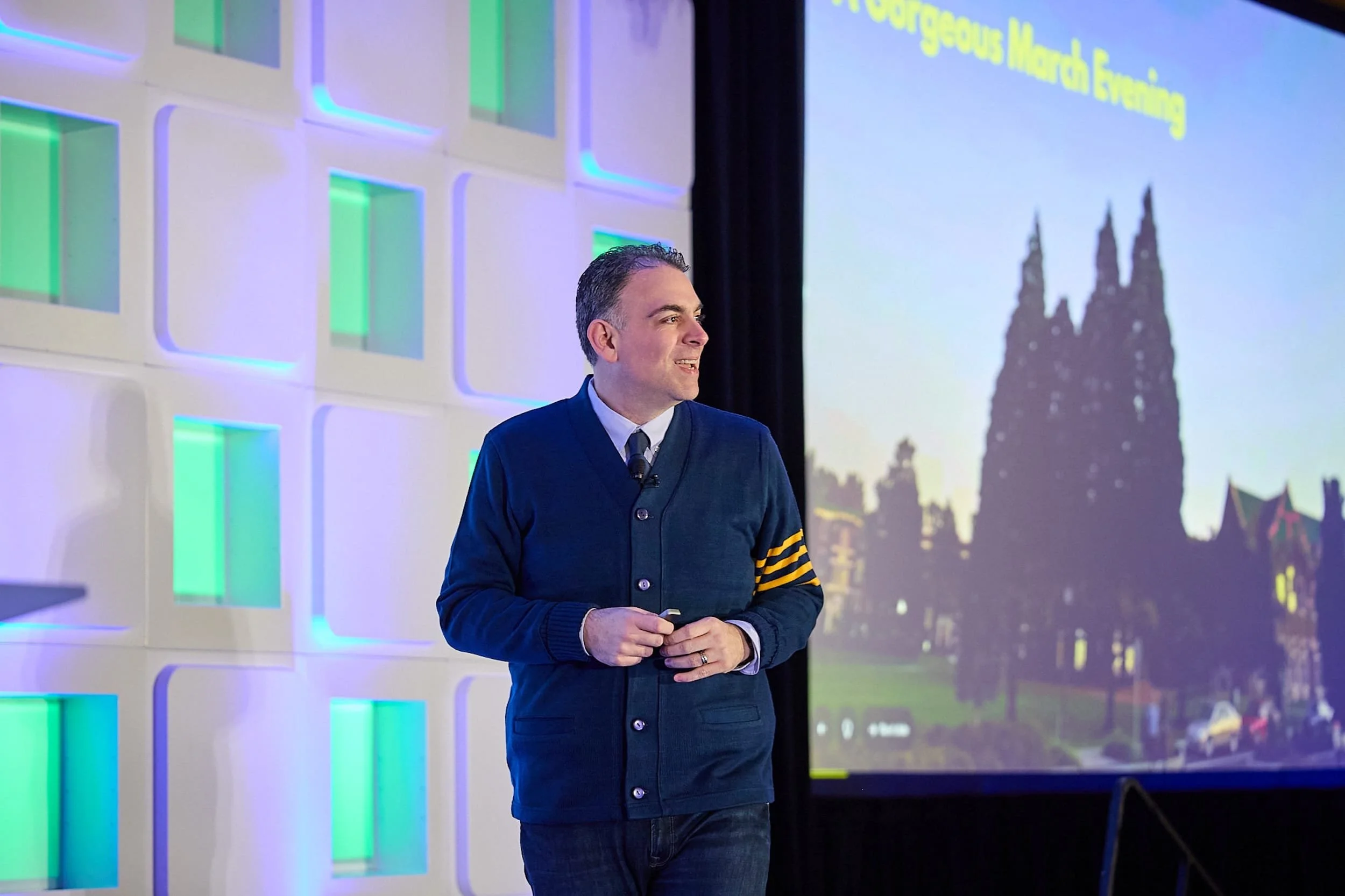
Mark has spoken at association conferences from PRSA and SHRM to America’s Credit Unions and NAHB. He understands that your members are juggling their day jobs while trying to grow as leaders, and that they’ve sat through many keynotes that promised more than they delivered. His sessions are designed with that skepticism in mind: practical frameworks, not abstract theory, built to be used in the office on Monday.
The Three-Point Impact™ also means your conference programming doesn’t have to end when the keynote does; Mark can extend the value for your members year-round through follow-up implementation and integration resources.
Who We Help
-
The Goal: A high-impact, high-energy speaker who over-delivers and is easy to work with.
The Result: Rave reviews from attendees and a “stress-free” programming slot.
-
The Goal: Proving the event’s ROI and strengthening the association’s “Value Prop.”
The Result: Increased member retention and a reputation for “must-attend" programming.
-
The Goal: Actionable tools they can take back to their company on Monday morning.
The Result: Sustained professional growth and a deeper connection to the association.
What We Address
-
Your member satisfaction may feel like they plateau year over year, and you’re looking to test new ideas.
-
You may book keynotes that get mild applause but don’t move anyone to act.
-
You might be working with a community of members who love the conference but struggle to stay energized the other 11 months.
How to work with Mark:
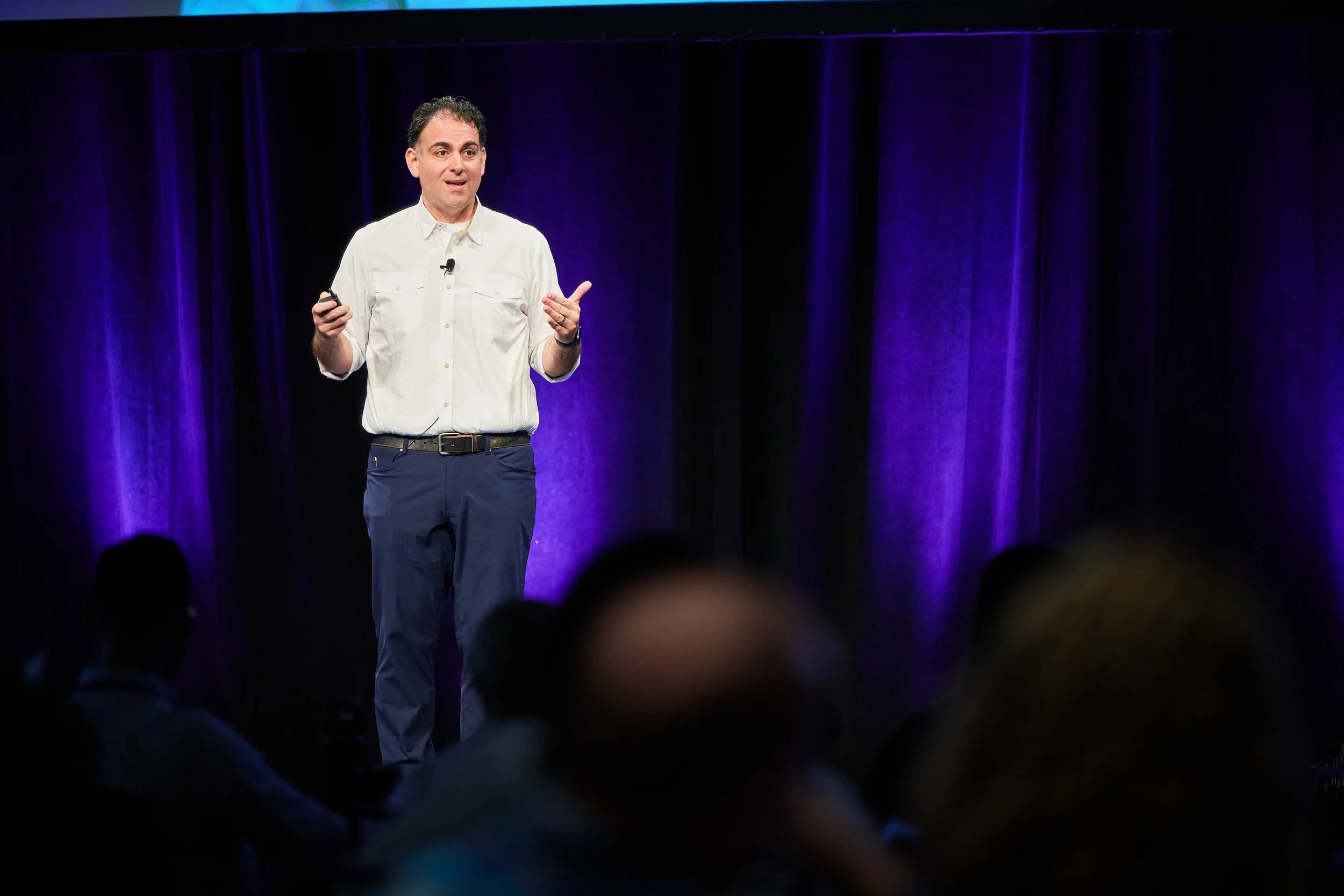
Keynote Conversation
Start here. An interactive session built around your people and your industry. 45 to 90 minutes, steeped in data, insights, humor, and engagement. Your audience walks out with something they can use the same day.
Team Facilitation & Offsites
Go deeper. Mark sits with your team and names what's been going unsaid. No personality colors. No letter types. No trust falls. Half-day, full-day, or multi-day. You leave with a written plan: decisions, owners, dates.
Three-Point Impact™
Make it stick. Mark’s signature program. Includes one keynote, a facilitated team session, and follow-up coaching on priority topics. This is a long-term investment that builds healthy, confident, and connected teams.
Keynote Conversation Topics
Mark's Leadership Keynote Conversations
The Buoyant Leader
Turns pressure into the thing your steadiest leaders are known for.
Under pressure, most leaders push harder. The steadiest ones do the opposite, and their people feel it. Your members work through a real high-pressure moment together, in the room, with peers who are carrying the same weight at different organizations. They practice staying clear enough to make the right call.
Why now: 77% of workers reported work-related stress in the past month, and 57% reported effects tied to burnout. (American Psychological Association)
Your leaders walk out able to:
- Stay steady with a routine they can run on their hardest days
- Read stress as a signal and use it to make a sharper call
- Bring calm back to their own team as something the team can feel
Pairs with Leading with Clarity and Calm: Offered after the conference to your chapter leaders, board, or staff: live scenarios and group coaching, so the session gets practiced instead of filed away.
Lead With Empathy
Turns empathy into a performance skill leaders can use under pressure.
Empathy is a skill most leaders were never taught, and most were told it was the opposite of accountability. Your members practice it live, in the moments where it is hardest: the underperformer, the frustrated client, the colleague who has stopped speaking up. They leave with moves they can use in the next conversation, not a definition.
Why now: Employees with highly empathic senior leaders report being innovative 61% of the time, compared with 13% under less empathic leaders, and 76% report being engaged, versus 32%. (Catalyst)
Your leaders walk out able to:
- Use perspective-taking to connect across rank, role, and organization
- Build the trust that gets people speaking up sooner
- Apply specific moves the day they are back at their desk
Pairs with The Empathy in Action workshop: A members-only session after the conference: paired conversations and real workplace scenarios, where leaders practice hearing the thing underneath what was said.
Lead a Healthy Culture of Well-being
Makes well-being how your team works, not a perk you offer.
The best teams didn't add a wellness program. They changed how they run meetings, onboard new hires, and give feedback. Your members examine their everyday habits and decide, in the room, which one they will change first when they get back to their own organization.
Why now: 52% of employees say their employer doesn't support their well-being in meaningful ways, and 69% of executives admit they have no way to measure it. (Deloitte)
Your leaders walk out able to:
- Treat well-being as a business driver, not an HR line item
- See how small leadership choices build or drain a team
- Run meetings, onboarding, and feedback so they build energy
Pairs with The Team Culture OS workshop: Run it for your own staff or board: leaders walk through their meetings, onboarding, and feedback habits, decide which one to change first, and agree on how they'll talk about energy and workload from then on.
REWORK: The Future-Ready Leader
Rebuilds the leadership playbook for a modern workplace.
The leadership habits of the last decade are working against the people using them. Your members rebuild their approach around energy and clarity, then test the new moves with peers from other organizations before taking them home.
Why now: Global employee engagement fell to 20% in 2025, the second straight annual decline and the lowest level since 2020. Manager engagement has dropped nine points since 2022. (Gallup)
Your leaders walk out able to:
- Lead around capacity, not control
- Treat purpose and belonging as daily practices, not nice-to-haves
- Build the motivation a team creates together instead of waiting for it
Pairs with The REWORK Sprint workshop: A follow-up sprint for members: map where their energy actually goes, pair up with someone from a different organization, and leave with a 30-day plan they run together.
Work in Sunlight
Reconnects your people to the work and to each other.
Disconnection is the new burnout, and it costs organizations their best people one quiet exit at a time. In the general session we name where belonging is slipping and build the habits that rebuild it, right there in the room.
Why now: Employees with a strong sense of belonging show 56% higher job performance and 50% lower turnover risk. (BetterUp)
Your leaders walk out able to:
- Measure performance by energy, clarity, and connection
- Build small daily habits that keep belonging alive between events
- Take a shared, practical plan back to their own team
Pairs with The Sunlight workshop: Built for the months between conferences: small daily habits, regular peer check-ins, and a connection map, so belonging survives the eleven months your members aren't in the same room.
The four facilitation topics teams ask for most.
Offsite themes
For teams seeking clarity and purpose
Gets everyone pointed at the same thing, in writing, before anyone leaves the room.
When you're merging departments, onboarding new leadership, or pivoting strategy, an offsite is the fastest way to align the compass. Mark designs the session to cut through the confusion instead of talking around it.
Why now: Across 124 organizations, only 28% of the executives and middle managers responsible for executing strategy could name three of their company's strategic priorities. (MIT Sloan Management Review)
- Before: A short team pulse and a conversation with you about what success looks like in the first 90 days.
- The offsite: Working sessions on mission, vision, and values that end in a written Team Charter.
- After: A 30/60/90-day plan and a follow-up guide, so clarity turns into consistency.
What the team walks away with:
- A shared purpose everyone can say out loud.
- Clear norms for how decisions get made and communicated.
- A foundation for a culture of well-being and accountability.
Pairs with the Lead a Healthy Culture of Well-being keynote and The Team Culture OS workshop. The keynote makes the case that culture is built through everyday decisions rather than programs. The offsite writes your team's version down. The workshop keeps it running after you leave the room.
For teams building confidence
Builds the nerve to say the thing in the room where it gets decided.
Your people are good at the work. They're less sure of themselves in the room where it gets decided. This offsite builds the confidence to speak up, be heard, and be trusted, under pressure and in front of leadership.
Why now: 61% of employees say they regularly watch colleagues stay silent rather than share a differing opinion, and 45% name psychological safety and trust as their single biggest concern at work. (Radical Candor, 2026 workplace report)
- Before: Each person picks a real upcoming conversation they're nervous about: a board update, a budget ask, a hard piece of feedback.
- The offsite: Hands-on work on influence, storytelling, and presence, ending with a live practice round in front of the group.
- After: A 90-day follow-through plan with checkpoints, so the confidence sticks.
What the team walks away with:
- Practical tools for influencing at the executive level.
- More clarity and more calm when the stakes are high.
- A team that speaks up before the hallway conversation.
Pairs with the The Buoyant Leader keynote and Leading with Clarity and Calm workshop. Confidence rests on calm. The keynote gives the room the idea and the language for it. The offsite gives them the reps, in front of people whose opinion they care about.
For executive teams and boards
Gets the hard decision made instead of postponed again.
High-stakes environments require high-stakes conversations. Mark provides the neutral structure that keeps dominant personalities from hijacking the agenda, so the hard decisions actually get made.
Why now: In a survey of more than 1,200 managers, 61% said at least half the time they spend making decisions is wasted. The strongest predictor of fast, high-quality decisions was the presence of real debate. (McKinsey & Company)
- Before: An anonymous team survey to surface where communication is strong and where it's stuck.
- The offsite: Structured work on the real disagreements, ending in a written operating agreement for how this team decides.
- After: A leadership health check at 30 and 60 days to track whether it's holding.
What the team walks away with:
- Faster decisions, because the real disagreement finally gets said out loud.
- Shared expectations and healthy boundaries.
- Stronger trust, transparency, and performance.
Pairs with the Lead With Empathy keynote and The Empathy in Action Lab workshop. Hard decisions need people who can hear the thing underneath what was said, especially when they disagree. That is the exact skill the keynote introduces and the lab drills.
For teams rebuilding after a hard year
Repairs the trust the last year quietly cost you.
A reorg. A round of layoffs. A leader who left. High turnover that never quite stopped. When a team has been through it, the work keeps going, but the trust doesn't. This offsite is about the health in healthy teams are wealthy teams: psychological safety, well-being, and repairing what got fractured.
Why now: Across 146 companies that conducted layoffs, employee confidence in the organization fell nearly 17 points, and engagement took 12 to 24 months to return to where it had been. (Harvard Business Review)
- Before: An anonymous pulse on how people are actually doing, plus a private conversation with you about what's been hardest.
- The offsite: Honest conversation about what the team has been carrying, guided so it stays safe and productive, ending in agreements on workload, boundaries, and how this team looks after each other.
- After: A well-being check-in at 30 and 60 days, so the agreements hold instead of fading.
What the team walks away with:
- Permission to say what's been hard, and a team that can hear it.
- Shared boundaries around workload and availability.
- A team that trusts each other again, and a leader they trust to keep it that way.
Pairs with the Work in Sunlight keynote and The Sunlight Series workshop. The keynote reconnects people to the work and to each other in a way that feels safe because everyone is in it together. The offsite repairs what got fractured. The series keeps belonging alive through the months that follow.
Any theme below can run as a half-day, full-day, or multi-day offsite. Mark builds the agenda around what your team actually needs.
“Mark was insightful, engaging, and exceptionally well received by our attendees. He brought a wealth of knowledge to the stage and presented it in a way that was both accessible and thought-provoking.”
— America's Credit Unions
Watch keynote excerpts:
Leading With Empathy Keynote
The Buoyant Leader Keynote
Culture of Well-being Keynote
“Mark was extremely adaptable and listened to our group's priorities and needs. Attendees left his session feeling inspired and motivated to further their leadership development skills.”
— Michael Davey, VP, Federation Services, National Association of Home Builders
Contact Mark about your event.
Email Mark at mark@chasingthesunpdx.com, call him at 360.609.1077, or fill out the form below.
Mark will respond to you within one business day.
Frequently asked questions:
How can associations increase member engagement at annual conferences?
By moving away from the passive talking-head format toward sessions members take part in. Mark's Keynote Conversations use live polls and small-group work built around the pressures that specific industry is facing, so members leave with leadership tools they can use on Monday morning rather than notes they never reopen.
Why should an association choose a leadership topic over technical training?
Technical skills matter, but leadership and culture are what keep members renewing. Members in high-pressure fields like healthcare, finance, and communications are burning out. An association that helps with that becomes a partner in someone's career rather than a line item in their budget.
How do you turn a conference keynote into something members use all year?
By planning past the closing session. The Three-Point Impact pairs the keynote with post-conference workshops and leadership retreats, so a single hour on stage becomes a year-round member benefit. Chapters and committees can run the follow-up work themselves using the materials from the session.
What should a meeting planner look for when vetting a speaker for an association?
Industry-specific knowledge and someone who is easy to work with. Mark provides headshots, bios, promo copy, and A/V requirements up front, and builds content around your theme rather than dropping in a standard talk with your logo on the title slide.
How much does an association keynote cost?
The fee depends on the format, the length of the session, travel, and whether you add a follow-up workshop or coaching. Email mark@chasingthesunpdx.com with your date, location, and audience size, and you will have a number back within one business day.