

The Quiet Discipline Behind Major Executive Achievements
The legacy of winning a major industry award or achieving massive weight loss is never the final headline. It is the unglamorous, solitary journey of early mornings, dietary discipline, and quiet resilience—proving that true well-being and success are built when no one is watching.
How do executives actually achieve massive professional results?
The legacy of winning a major industry award or achieving massive weight loss is never the final headline. It is the unglamorous, solitary journey of early mornings, dietary discipline, and quiet resilience—proving that true well-being and success are built when no one is watching.
The legacy of winning a significant PR award like a Bronze or Silver Anvil isn’t just in the quantifiable metrics. Or the headlines. Or the executive kudos.
It’s the planning. The last-minute changes. The managing of egos. The delay. The acceleration. The blood, sweat, and tears.
These are often the aspects of the process most people forget about.
It’s not talked about at the award ceremony. Or in the celebratory social media post. But it’s what you remember most when you hold the award.
And that’s the same when it comes to changes to our well-being. In my case, that was my 150-pound weight loss journey that started on a dark December Friday night in 2007.
The changes were one at a time. It was shifting breakfast options. Exercising a few more times weekly and not eating so late at night.
But no one was watching to monitor me. No one was waking me up at 5:00 a.m. to work out. No one was telling me to swap sugary mochas for green tea. I was on my own.
But that’s what I remember most about the journey. Not the compliments. Not the after photos. But the journey.
And that’s what I want you to think about as you think about as we head into the holiday season. Start the journey now. Not Monday. Not January 1. Today. Because I am Exhibit A any positive change to your well-being is an extraordinary journey. And you want to experience those memorable journeys as soon as possible.
So, no matter what change you want to make for your well-being, there’s no reason to wait for the New Year. Are you looking to save a few more dollars, lose a few more pounds, or gain more sleep? Start today, and in 60 days, you will feel so much better and so proud of the decision you made at this very moment.
Most of all, you’ll look at specific days and reflect on how the choices you made had an impact.
Remember, it’s the journey, the process, not the result, that you will remember most.
The journey starts with you. You’re the author of your story; pick up your pen and get writing!
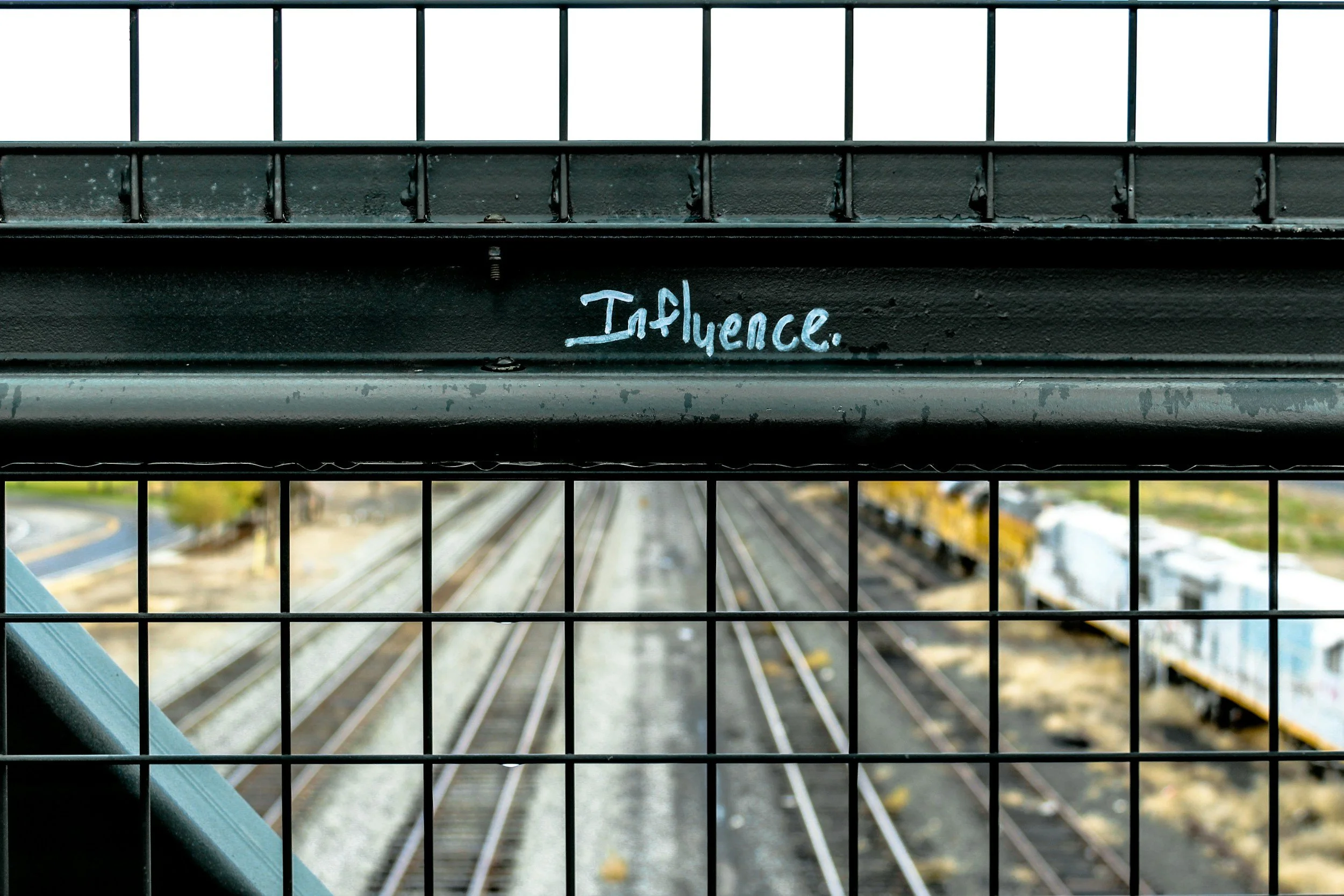
Why Every Public Relations Professional is a True Influencer
While social media "influencers" chase fleeting trends, public relations professionals exert lifelong, authentic influence over the next generation of communicators. Executives must recognize that their daily actions, career pivots, and ethical leadership quietly establish the benchmark for hundreds of observing professionals.
How does authentic executive leadership influence the PR industry?
While social media "influencers" chase fleeting trends, public relations professionals exert lifelong, authentic influence over the next generation of communicators. Executives must recognize that their daily actions, career pivots, and ethical leadership quietly establish the benchmark for hundreds of observing professionals.
Our profession has incredible highs – the prominent media placement, the new business win, the Silver Anvil. At times, however, it can be mentally draining. From long days to sleepless nights, our brains are working overtime to help meet the objectives of our businesses and clients.
One of the ways in which we help overcome this is a typical mindset shift: “It’s PR, not ER.” While this mindset shift can help at times, I want to share and remind ourselves that what we do and how we work has a profound impact on those beyond who we know.
We are Influencers. Big I. Not “influencers” we see on our social media channels. But real, authentic leaders who have a lasting, lifelong impact on those we work with every day.
Are you a new Account Executive at a PR firm? Dozens, if not hundreds, of college students and brand-new pros look up to you. They’re checking out your LinkedIn profile, wanting to be you one day, nervous to message you and ask if you could mentor them as they start their journey.
That’s Influence. Capital I.
Are you a new Chief Communications Officer for a Fortune 500 company? Are you experiencing a little imposter syndrome, perhaps (we all do!)? Just know you have a following who are in awe of your progression, would read any book you write, and do anything for a few minutes to learn about your journey because they want to be you in 5, 10, or 15 years.
That’s Influence. Capital I.
Have you recently shared on LinkedIn about your new consultancy? It’s nerve-wracking, isn’t it? I remember those days! There are so many people you inspire with your story who want to be brave and bold enough to go out on their own. They might reach out to you in a few weeks or months. “How did you do it?” they’ll ask.
That’s Influence. Capital I.
Are you a public relations professor, ever wondering what the lasting impact of your courses will have on your students? Know that what you’re saying will not only have a short-term impact, but a lifelong one as well. I know my PR professor literally changed the course of my personal and professional life.
That’s Influence. Capital I.
This is what we don’t realize. That we influence people. This is not to put pressure on ourselves but to set the context and boost our spirits that what we do matters to businesses and those who aspire to be us one day.
In a world of social media influencers touting tailored products and experiences, be a true Influencer.
Capital I.

The Critical Need for Formal People Manager Training
An astonishing 83% of new people managers receive zero formal leadership training, instantly accelerating executive burnout across the public relations industry. To protect their well-being, new leaders must fiercely prioritize their physical health over new titles, redefine communication as a critical hard skill, and establish safe peer learning communities
Why do new people managers instantly experience executive burnout?
An astonishing 83% of new people managers receive zero formal leadership training, instantly accelerating executive burnout across the public relations industry. To protect their well-being, new leaders must fiercely prioritize their physical health over new titles, redefine communication as a critical hard skill, and establish safe peer learning communities
I recently polled nearly 400 new people managers in the public relations profession. When asked if they received formal manager training, I learned only 17 percent have, while 83 percent received informal or zero training.
It’s no wonder why the people manager is the most challenging position in our profession. We don’t know how to be one.
And because we don’t know how to be one, we get overwhelmed and burned out, impacting our well-being and those we manage.
Reflecting on my career, I realized I lacked formal management training. I had great managers to model and follow, but as I examined times I learned tough lessons, many were due to a lack of education in several areas that I should have learned much earlier.
We need to address proper training of new people managers in a relatable, practical, and actionable way so they can immediately develop into trusted advisors for their clients and teams.
If you’re a new people manager or responsible for helping build a new group of people managers, please take these three tips to heart.
New titles, money, and responsibilities should never come at the cost of your well-being.
Your well-being is always paramount to any updated title or list of responsibilities. Often, we take on new challenges with a positive mindset, which is great until the nights are longer and the weekends are shorter. We feel guilty about taking a vacation, and those back-to-back all-day meetings are more the standard than the exception.
You are no good to your clients and teams if you’re well-being isn’t at 100 percent, and most importantly, it’s no good to you.
There are no “soft” skills, only “skills.”
Often we think about skills like “teamwork,” “communication,” “time management,” as “soft skills.” This is an inaccurate phrase that deemphasizes the importance of these skills to the well-being of the employee and business. The assumed “traditional” skills like writing, presenting, and creating spreadsheets mean nothing if you are unhealthy.
We need to call all these activities simply skills and weigh them as crucial as any other skill.
We must share and learn from one another.
It’s ok not to have all the answers. Many of us don’t!
Being a leader can be a lonely experience. Even with all the training, it’s nothing if there isn’t an environment where people can learn and share ideas safely.
Find a group of peers, whether in your organization or through other avenues, to formally connect with regularly. Share ideas and be vulnerable. You’ll be surprised how much you’ll hear about others going through the same challenges.
So, ask yourself: are you in the 17 or 83 percent? And if you’re in the 83 percent, what steps will you take soon?

The 15-Minute Meeting Audit: Reclaiming Your Executive Calendar
Mindless recurring meetings are a primary driver of corporate burnout and late-night catch-up work. Executives can instantly reclaim hours of productivity by performing a quarterly "Meeting Audit"—ruthlessly converting 60-minute updates into 30-minute deep-dives and transitioning video calls into audio-only conversations.**
How can an executive effectively audit and reduce unnecessary meetings?
Mindless recurring meetings are a primary driver of corporate burnout and late-night catch-up work. Executives can instantly reclaim hours of productivity by performing a quarterly "Meeting Audit"—ruthlessly converting 60-minute updates into 30-minute deep-dives and transitioning video calls into audio-only conversations.
“Mark, I’m in meetings all day, so I finally have a chance to work at night.”
My heart sinks every time I hear this from a colleague.
Meetings are a necessity in the public relations profession. They’re also a potentially significant time sink that, when not micromanaged, can impact our well-being.
The meetings we participate in should be prescriptive. Attendees should feel like it was a valuable use of their time, decisions made, and clear actions taken.
Too often, we default to scheduling a meeting. And yet, how many times have we heard, “That meeting could have been an email?”
As I was writing this column, I spoke with an executive who told me about the impact of frequent and unnecessary late-night meetings they used to participate in and the permanent effect it took on their personal life.
Meetings should not be playing such a role!
With some work, I think we can make a long-lasting impact on our personal lives and careers.
As we head into the fall, this is a great time to take 15 minutes to make a list of all your recurring meetings. These can be daily, weekly, bi-weekly, or monthly meetings of all facets: 1:1s, team, partner, and client.
As you assess these meetings, ask yourself:
- Do I understand the purpose of these meetings?
- How often are these meetings moved or canceled?
- What is my role in these meetings? If I’m running these meetings, are the right people in the sessions? If I’m not running these meetings, what’s the level of value in participating?
- Is the length of these meetings appropriate?
- Do these need to be on camera, or can they be audio-only?
- Is the style of these meetings valuable? If I have several “status” meetings, should I evolve these meetings to focus less on project status – which can be communicated through software - and more on decision making?
- What is the value of the 1:1 meetings I have with my manager and those I’m managing? Am I discussing topics that better my/their relationship and career, or are they project status conversations?
I conducted my audit recently and noticed I have defaulted to too many 60-minute meetings for introductory and networking calls. I’ve adjusted these to 30-minute video calls for initial meetings, with audio calls for subsequent follow-ups.
This 15-minute exercise can save you hours to exercise, meal prep, or spend time with friends and family!
Consider conducting a meeting audit every quarter. Set a calendar reminder to rerun this in November to prepare you for a busy holiday season.
On a related note, there are times when you might be thinking, “This email thread is too confusing; let’s get on the phone!” If after three attempts to clarify a conversation topic are unsuccessful, I encourage you to pick up the phone and discuss the issue.
I look forward to hearing from you about the adjustments you’ve made and the impact on your life.

Attaining Buoyancy: Reclaiming Your Optimism at Work
The relentless pressure of brand protection and crisis management constantly threatens a public relations professional’s mental health. By rigorously setting boundaries against 10-hour work sprints and deliberately modeling healthy vacation habits, executives can reclaim their professional "buoyancy"—an optimistic, resilient disposition.
How can PR professionals attain "buoyancy" and optimism?
The relentless pressure of brand protection and crisis management constantly threatens a public relations professional’s mental health. By rigorously setting boundaries against 10-hour work sprints and deliberately modeling healthy vacation habits, executives can reclaim their professional "buoyancy"—an optimistic, resilient disposition.
It’s a warm Tuesday morning in the middle of summer. You’ve given yourself the flexibility to have a little rest and relaxation in-between meetings and deliverables. It’s just you on a giant flamingo float in a swimming pool. Suntan lotion applied, sunglasses on, drinks in hand as you tune out the world and tune into how you’re feeling. Positive, upbeat, energized.
You’re attaining – literal and metaphorical - buoyancy.
Lately, I’ve been fixated on the word buoyancy. Typically, we think about the word in terms of floating or as it relates to the economy or stock market. But I’ve been focused on a third definition: “an optimistic or cheerful disposition.”
At times it’s a challenge to be optimistic or cheerful. Many challenges are thrown at us as public relations professionals, parents, children, friends, volunteers, and other groups close to us. For some of us, our jobs are about sharing positive messages with our publics. For others, we’re brand protectors. For others, it’s to handle crises every day. The diversity of our work is one of many things I love about our profession.
At the same time, our work can and does impact our well-being. Whether it’s the long hours, the people we work with, or the work itself, it can be emotionally, mentally, and physically draining.
In this Strategies and Tactics issue focusing on health and wellness, you’ll read articles giving you many great ideas on prioritizing your well-being.
As you go through the ideas in the issue, please consider how taking action will help you this summer and beyond attain buoyancy. Examples might include:
- How to set boundaries so you’re not working 10 hours straight without a break.
- Taking actionable steps to build trust with your key stakeholders so you feel confident you can be away without fear of retribution.
- Feeling empowered to look for a new job or take on a new set of clients you advocate for.
- Creating a mindset of how your actions – whether it’s taking a vacation or prioritizing your mental or physical health - show up in front of your family, friends, bosses, colleagues, and clients.
- Learning how to help the next generation of PR professionals become trusted advisors while at the same time protecting their well-being.
My goal for you this summer is to use the great lessons in this issue to find your path to attaining buoyancy.
Please reach out this summer and let me know the steps you’re taking to prioritize your well-being.
In the meantime, have a safe, healthy, and buoyant summer!