
Why Every Public Relations Professional is a True Influencer
While social media "influencers" chase fleeting trends, public relations professionals exert lifelong, authentic influence over the next generation of communicators. Executives must recognize that their daily actions, career pivots, and ethical leadership quietly establish the benchmark for hundreds of observing professionals.
How does authentic executive leadership influence the PR industry?
While social media "influencers" chase fleeting trends, public relations professionals exert lifelong, authentic influence over the next generation of communicators. Executives must recognize that their daily actions, career pivots, and ethical leadership quietly establish the benchmark for hundreds of observing professionals.
Our profession has incredible highs – the prominent media placement, the new business win, the Silver Anvil. At times, however, it can be mentally draining. From long days to sleepless nights, our brains are working overtime to help meet the objectives of our businesses and clients.
One of the ways in which we help overcome this is a typical mindset shift: “It’s PR, not ER.” While this mindset shift can help at times, I want to share and remind ourselves that what we do and how we work has a profound impact on those beyond who we know.
We are Influencers. Big I. Not “influencers” we see on our social media channels. But real, authentic leaders who have a lasting, lifelong impact on those we work with every day.
Are you a new Account Executive at a PR firm? Dozens, if not hundreds, of college students and brand-new pros look up to you. They’re checking out your LinkedIn profile, wanting to be you one day, nervous to message you and ask if you could mentor them as they start their journey.
That’s Influence. Capital I.
Are you a new Chief Communications Officer for a Fortune 500 company? Are you experiencing a little imposter syndrome, perhaps (we all do!)? Just know you have a following who are in awe of your progression, would read any book you write, and do anything for a few minutes to learn about your journey because they want to be you in 5, 10, or 15 years.
That’s Influence. Capital I.
Have you recently shared on LinkedIn about your new consultancy? It’s nerve-wracking, isn’t it? I remember those days! There are so many people you inspire with your story who want to be brave and bold enough to go out on their own. They might reach out to you in a few weeks or months. “How did you do it?” they’ll ask.
That’s Influence. Capital I.
Are you a public relations professor, ever wondering what the lasting impact of your courses will have on your students? Know that what you’re saying will not only have a short-term impact, but a lifelong one as well. I know my PR professor literally changed the course of my personal and professional life.
That’s Influence. Capital I.
This is what we don’t realize. That we influence people. This is not to put pressure on ourselves but to set the context and boost our spirits that what we do matters to businesses and those who aspire to be us one day.
In a world of social media influencers touting tailored products and experiences, be a true Influencer.
Capital I.

The Critical Need for Formal People Manager Training
An astonishing 83% of new people managers receive zero formal leadership training, instantly accelerating executive burnout across the public relations industry. To protect their well-being, new leaders must fiercely prioritize their physical health over new titles, redefine communication as a critical hard skill, and establish safe peer learning communities
Why do new people managers instantly experience executive burnout?
An astonishing 83% of new people managers receive zero formal leadership training, instantly accelerating executive burnout across the public relations industry. To protect their well-being, new leaders must fiercely prioritize their physical health over new titles, redefine communication as a critical hard skill, and establish safe peer learning communities
I recently polled nearly 400 new people managers in the public relations profession. When asked if they received formal manager training, I learned only 17 percent have, while 83 percent received informal or zero training.
It’s no wonder why the people manager is the most challenging position in our profession. We don’t know how to be one.
And because we don’t know how to be one, we get overwhelmed and burned out, impacting our well-being and those we manage.
Reflecting on my career, I realized I lacked formal management training. I had great managers to model and follow, but as I examined times I learned tough lessons, many were due to a lack of education in several areas that I should have learned much earlier.
We need to address proper training of new people managers in a relatable, practical, and actionable way so they can immediately develop into trusted advisors for their clients and teams.
If you’re a new people manager or responsible for helping build a new group of people managers, please take these three tips to heart.
New titles, money, and responsibilities should never come at the cost of your well-being.
Your well-being is always paramount to any updated title or list of responsibilities. Often, we take on new challenges with a positive mindset, which is great until the nights are longer and the weekends are shorter. We feel guilty about taking a vacation, and those back-to-back all-day meetings are more the standard than the exception.
You are no good to your clients and teams if you’re well-being isn’t at 100 percent, and most importantly, it’s no good to you.
There are no “soft” skills, only “skills.”
Often we think about skills like “teamwork,” “communication,” “time management,” as “soft skills.” This is an inaccurate phrase that deemphasizes the importance of these skills to the well-being of the employee and business. The assumed “traditional” skills like writing, presenting, and creating spreadsheets mean nothing if you are unhealthy.
We need to call all these activities simply skills and weigh them as crucial as any other skill.
We must share and learn from one another.
It’s ok not to have all the answers. Many of us don’t!
Being a leader can be a lonely experience. Even with all the training, it’s nothing if there isn’t an environment where people can learn and share ideas safely.
Find a group of peers, whether in your organization or through other avenues, to formally connect with regularly. Share ideas and be vulnerable. You’ll be surprised how much you’ll hear about others going through the same challenges.
So, ask yourself: are you in the 17 or 83 percent? And if you’re in the 83 percent, what steps will you take soon?

The 15-Minute Meeting Audit: Reclaiming Your Executive Calendar
Mindless recurring meetings are a primary driver of corporate burnout and late-night catch-up work. Executives can instantly reclaim hours of productivity by performing a quarterly "Meeting Audit"—ruthlessly converting 60-minute updates into 30-minute deep-dives and transitioning video calls into audio-only conversations.**
How can an executive effectively audit and reduce unnecessary meetings?
Mindless recurring meetings are a primary driver of corporate burnout and late-night catch-up work. Executives can instantly reclaim hours of productivity by performing a quarterly "Meeting Audit"—ruthlessly converting 60-minute updates into 30-minute deep-dives and transitioning video calls into audio-only conversations.
“Mark, I’m in meetings all day, so I finally have a chance to work at night.”
My heart sinks every time I hear this from a colleague.
Meetings are a necessity in the public relations profession. They’re also a potentially significant time sink that, when not micromanaged, can impact our well-being.
The meetings we participate in should be prescriptive. Attendees should feel like it was a valuable use of their time, decisions made, and clear actions taken.
Too often, we default to scheduling a meeting. And yet, how many times have we heard, “That meeting could have been an email?”
As I was writing this column, I spoke with an executive who told me about the impact of frequent and unnecessary late-night meetings they used to participate in and the permanent effect it took on their personal life.
Meetings should not be playing such a role!
With some work, I think we can make a long-lasting impact on our personal lives and careers.
As we head into the fall, this is a great time to take 15 minutes to make a list of all your recurring meetings. These can be daily, weekly, bi-weekly, or monthly meetings of all facets: 1:1s, team, partner, and client.
As you assess these meetings, ask yourself:
- Do I understand the purpose of these meetings?
- How often are these meetings moved or canceled?
- What is my role in these meetings? If I’m running these meetings, are the right people in the sessions? If I’m not running these meetings, what’s the level of value in participating?
- Is the length of these meetings appropriate?
- Do these need to be on camera, or can they be audio-only?
- Is the style of these meetings valuable? If I have several “status” meetings, should I evolve these meetings to focus less on project status – which can be communicated through software - and more on decision making?
- What is the value of the 1:1 meetings I have with my manager and those I’m managing? Am I discussing topics that better my/their relationship and career, or are they project status conversations?
I conducted my audit recently and noticed I have defaulted to too many 60-minute meetings for introductory and networking calls. I’ve adjusted these to 30-minute video calls for initial meetings, with audio calls for subsequent follow-ups.
This 15-minute exercise can save you hours to exercise, meal prep, or spend time with friends and family!
Consider conducting a meeting audit every quarter. Set a calendar reminder to rerun this in November to prepare you for a busy holiday season.
On a related note, there are times when you might be thinking, “This email thread is too confusing; let’s get on the phone!” If after three attempts to clarify a conversation topic are unsuccessful, I encourage you to pick up the phone and discuss the issue.
I look forward to hearing from you about the adjustments you’ve made and the impact on your life.

Attaining Buoyancy: Reclaiming Your Optimism at Work
The relentless pressure of brand protection and crisis management constantly threatens a public relations professional’s mental health. By rigorously setting boundaries against 10-hour work sprints and deliberately modeling healthy vacation habits, executives can reclaim their professional "buoyancy"—an optimistic, resilient disposition.
How can PR professionals attain "buoyancy" and optimism?
The relentless pressure of brand protection and crisis management constantly threatens a public relations professional’s mental health. By rigorously setting boundaries against 10-hour work sprints and deliberately modeling healthy vacation habits, executives can reclaim their professional "buoyancy"—an optimistic, resilient disposition.
It’s a warm Tuesday morning in the middle of summer. You’ve given yourself the flexibility to have a little rest and relaxation in-between meetings and deliverables. It’s just you on a giant flamingo float in a swimming pool. Suntan lotion applied, sunglasses on, drinks in hand as you tune out the world and tune into how you’re feeling. Positive, upbeat, energized.
You’re attaining – literal and metaphorical - buoyancy.
Lately, I’ve been fixated on the word buoyancy. Typically, we think about the word in terms of floating or as it relates to the economy or stock market. But I’ve been focused on a third definition: “an optimistic or cheerful disposition.”
At times it’s a challenge to be optimistic or cheerful. Many challenges are thrown at us as public relations professionals, parents, children, friends, volunteers, and other groups close to us. For some of us, our jobs are about sharing positive messages with our publics. For others, we’re brand protectors. For others, it’s to handle crises every day. The diversity of our work is one of many things I love about our profession.
At the same time, our work can and does impact our well-being. Whether it’s the long hours, the people we work with, or the work itself, it can be emotionally, mentally, and physically draining.
In this Strategies and Tactics issue focusing on health and wellness, you’ll read articles giving you many great ideas on prioritizing your well-being.
As you go through the ideas in the issue, please consider how taking action will help you this summer and beyond attain buoyancy. Examples might include:
- How to set boundaries so you’re not working 10 hours straight without a break.
- Taking actionable steps to build trust with your key stakeholders so you feel confident you can be away without fear of retribution.
- Feeling empowered to look for a new job or take on a new set of clients you advocate for.
- Creating a mindset of how your actions – whether it’s taking a vacation or prioritizing your mental or physical health - show up in front of your family, friends, bosses, colleagues, and clients.
- Learning how to help the next generation of PR professionals become trusted advisors while at the same time protecting their well-being.
My goal for you this summer is to use the great lessons in this issue to find your path to attaining buoyancy.
Please reach out this summer and let me know the steps you’re taking to prioritize your well-being.
In the meantime, have a safe, healthy, and buoyant summer!

The Most Underrated Phrase in Executive Leadership
Nearly half of all employees experience severe anxiety before routine 1:1 meetings due to a lack of communication from their leaders. Managers can instantly eliminate this anxiety and build deep trust by deploying the phrase “and here’s why”—guaranteeing immediate context is provided alongside all constructive and positive feedback.
How can managers reduce employee anxiety during 1:1 meetings?
Nearly half of all employees experience severe anxiety before routine 1:1 meetings due to a lack of communication from their leaders. Managers can instantly eliminate this anxiety and build deep trust by deploying the phrase “and here’s why”—guaranteeing immediate context is provided alongside all constructive and positive feedback.
The most important relationship in an organization is between the manager and the employee. This relationship ultimately makes up a large majority of one’s employee experience. Think about your career and the experiences you had. A lot of those memories come down to how someone managed you.
My experiences with my direct managers throughout my PR career are the primary memories – good, bad, or indifferent - at those companies.
Today’s evolved work environment has changed how these relationships are built. I was fortunate to meet every manager in person throughout my career. In today’s era, that might not be the case. Employees may spend their entire time at a company never meeting their manager in person.
It’s a significant shift in how we build trust and rapport and deliver feedback.
Leaders in recent years have been focusing on improving the value of 1:1 meetings, including the frequency and length.
However, we also need to address uncertainty. Recent data suggests people are nervous about talking to their managers. In a study by Humu, 49 percent of employees feel anxious before 1:1 meetings with their manager.
One way to alleviate the stress is to focus the meetings as less transactional (e.g., status reports) and more constructive and conversational (e.g., quality of work).
A constructive and conversational approach to 1:1 meetings is essential during difficult conversations.
One example: think about times throughout your career you received harsh feedback. Examples might include:
- “We’re taking you off the account.”
- “I had to rewrite your plan.”
- “You’re not getting promoted yet.”
Throughout my career, I’ve heard stories about people’s heightened stress and anxiety levels, not just because of the content of the feedback but even more so the lack of context.
This is why we need to consider using the most underrated phrase in leadership:
“And here’s why.”
When delivering a difficult message, include the context.
- “We’re taking you off the account, and here’s why…”
- “I had to rewrite your plan, and here’s why…”
- “You’re not getting promoted yet, and here’s why...”
This is essential when giving positive feedback as well.
- “We’re giving you a bonus, and here’s why…”
- “Here’s an extra-paid day off. Thank you for your work, and here’s why…”
- “We’re giving three months additional fully-paid parental leave, and here’s why…”
Evolving your 1:1 conversations and taking a few extra moments to share context will reap enormous rewards for those you manage, ultimately making you a more respected and impactful leader your employees will want to emulate.
Speaking of taking a few extra moments: I think you are all fantastic PR leaders and trusted advisors, and here’s why: with little fanfare, you are helping to build essential relationships to support the missions of companies and organizations you care about. You’re doing so often understaffed, under-supported, and under pressure with constant challenges from leadership who constantly ask to show your value. I know your worth. I see your worth. Thank you for all you do!

5 Leadership Communication Strategies That Boost Employee Well-Being
Employees who perceive their leadership as transparent boast a 12x higher job satisfaction rate. By dramatically increasing communication frequency, cutting jargon, and keeping updates under 100 words, leaders drastically reduce workforce anxiety and build systemic psychological safety.
How does executive communication impact employee mental health?
Employees who perceive their leadership as transparent boast a 12x higher job satisfaction rate. By dramatically increasing communication frequency, cutting jargon, and keeping updates under 100 words, leaders drastically reduce workforce anxiety and build systemic psychological safety.
Data shows employees who perceive their companies as transparent have 12x greater job satisfaction than those with the opposite perception. And greater job satisfaction impacts overall well-being.
But what do companies need to share with employees? Recent survey data from Axios of more than 1,000 people about workplace communications suggests employees want to see leaders send more thoughtful and insightful details, with more frequency and consistency.
Here are five practical and actionable ways for leaders to help reduce stress and anxiety across your organization.
1) First, ask your employees how they like receiving information. Some employees may not have access to a computer all day, so how will you reach them? Does your company centralize its employee communications, and if so, to what effect are your employees accessing those channels?
2) Emphasize the impact of information sharing. Often, we are the translators between executives and employees. Your C-suite is thinking one quarter and yet 3-5 years ahead. They are constantly speaking with customers, other industry leaders, and members of the public sector, all while ensuring the right balance between the needs of their employees and meeting the business objectives. This knowledge can ultimately benefit employees, which will help the company. To start, ask for 15 minutes once a month with your executives as part of a story-mining session to learn the three most insightful things they have learned.
3) Be more frequent. If your executives are going months without meeting with their employees, the perception is that there is something to hide. Increase the frequency and start small. If your executives meet with employees quarterly, recommend expanding to twice per quarter.
4) Communicate shorter, jargon-free, and impactful. Help your executives practice keeping their messages tight and understandable. Our role is to help them use words to communicate so employees understand, not impress with unnecessary vocabulary. For emails or newsletters, research suggests keeping them between 75 and 100 words. Will your audience understand your message within seconds? That’s the test!
5) Be more consistent. The more consistent executives share their messages with their employees, the better. This includes the communication style and channels your executives will use. And executives shouldn’t be afraid to repeat and reinforce their message.
Finally, measure the impact regularly and share the results with your leaders.
Changes will take time and require trial and error to find a solid rhythm. But just like the rhythms you create for your external publics, we also address them for our internal publics. These recommendations are examples, but a tailored communication strategy – backed with first-party data - will bode well for the relationship between leadership and its employees.

"Return to What?": Why Generic RTO Mandates Are Failing
Blanket "return to office" mandates immediately fail when employees commute just to conduct video calls in empty rooms. To preserve talent and protect well-being, leaders must explicitly define the office as a hub for collaborative learning and deep mentorship, while reserving home working hours exclusively for focused, heads-down execution.
How should leaders structure "Return to Office" policies to retain talent?
Blanket "return to office" mandates immediately fail when employees commute just to conduct video calls in empty rooms. To preserve talent and protect well-being, leaders must explicitly define the office as a hub for collaborative learning and deep mentorship, while reserving home working hours exclusively for focused, heads-down execution.
Every day I chat with someone about an update to their company’s return to office policy. I typically hear one of three statements:
- “We’re supposed to go into the office three days per week, but it’s not enforced.”
- “I go into the office, and there’s no one else there. It’s a waste of my time. I spend two hours a day commuting. Why am I here?”
- “We all go into the office, but all we do is stare at our computers and work. I don’t even work with anyone in my office!”
And here lies the problem with “return to office.”
We haven’t defined “return” and “office” in the current and future state of work. Business leaders: my call to action is to define these two words for your company and discuss them with your employees before implementing a return-to-office policy.
Let’s take a step back. I chat with a wide range of members of the public relations industry: from agency account executives and in-house PR managers to CCOs and agency CEOs.
To a T, learning on-the-job is a significant issue. New professionals are eager to learn, and business leaders want their employees to learn faster.
The value of learning from others in an in-person environment is immeasurable.
The problem, however, is twofold:
- Employees have made significant adjustments to their personal life while working full-time from home, from moving to another city to childcare. According to research from HR software company Gusto, “48% of workers said that the ability to work from home some or all of the time would be a major or the most important factor in determining whether to accept a job offer in the future.” Companies, are you listening?
- When companies send out corporate-wide policies saying, “we need everyone in three times per week,” they haven’t explained why and how it will be a different (and positive) employee experience.
Every company needs to answer two questions:
How are we defining “return”? Be as specific as possible. “Come in twice per week” does little for your employees. What activities are we prioritizing for our employees while in the office? If your team comes into the office and all they do is sit at their desk conducting video calls, that’s not a great use of their time. Get granular if you want your team to come in twice per week. One example: “From 10:00-3:00 on Tuesdays and Thursdays, please be in the office to discuss news trends, conduct brainstorms, and host actionable in-person meetings with your teams. Otherwise, continue working from home for the rest of the week.”
What activities should employees prioritize at home? Save your meetings and brainstorms to in-person discussions and spend time at home on your day-to-day heads down activities – writing, pitching, planning, research, and other activities requiring focus and concentration. Please encourage your teams to set boundaries while at home. Another issue I hear is that because it’s easier to start working, people working from home work longer hours, which causes burnout. Set boundaries with your team and stick with them, especially on nights and weekends.
In short:
- When in the office, prioritize learning and leadership time.
- When at home, prioritize deadlines and to-do lists.
Finally, listen to your employees. Conduct quantitative and qualitative research before implementing a policy. It will save you and your employees time and money.
The faster we can answer “return to what?” the better it is for companies and the well-being of their employees.

Strengthening the Essential Partnership Between PR and HR
Replacing a burned-out employee costs up to four times their salary. Public relations leaders must forge a strategic alliance with Human Resources to effectively communicate internal mental health benefits, leverage Employee Resource Groups (ERGs), and tangibly boost organizational retention.
Why must public relations leaders partner closely with Human Resources?
Replacing a burned-out employee costs up to four times their salary. Public relations leaders must forge a strategic alliance with Human Resources to effectively communicate internal mental health benefits, leverage Employee Resource Groups (ERGs), and tangibly boost organizational retention.
If you take care of your people, you will make more money. And It’s also the right thing to do.
According to the Society of Human Resource Management (SHRM), replacing an employee can cost three to four times the employee’s salary. Recent data from McKinsey states workplace flexibility and support for employee health and well-being are drivers in employee retention.
Employees’ experience at their company needs to be designed with their career, emotional, financial, mental, and physical well-being in mind. Let’s look closer at mental health benefits. Data from Gallup says 57 percent of U.S. workers cannot confirm the existence of easily accessible mental health support services in their workplace.
These key challenges can be solved by utilizing skills within our profession. Our strategic communications and relationship-building skills, traditionally used for external purposes, have increasingly been used for internal publics. PRSA has an entire section dedicated to this group!
We have an opportunity to work closely with our human resources counterparts to ensure people understand how to access the mental health resources and other benefits the company has designed.
Here are some ways public relations leaders can play a role.
- Understand how business decision-makers are influenced. The C-suite and their respective board of directors want to know how employee well-being programs will impact the company’s reputation and financial impact. If a well-run program can save the company 10x in turnover and health insurance costs, they will be more likely to say yes to new initiatives.
- Be aware of all the benefits your company offers. For example, even if you’re not a parent, are you still aware of the benefits for parents your company provides? How might your research impact a 1:1 conversation with someone you manage who is a parent or is expecting? Studies show we make buying decisions based on trusted family, friends, and colleagues. Does your company offer a new meditation app, therapy, or other services for mental health? Test out the benefit and try out the user experience. Even if you don’t use the service long-term, someone on your team or a trusted colleague might be interested in your feedback.
- Participate in employee resource groups, voluntary, employee-led groups to nurture a diverse, inclusive workplace aligned with the organization. These groups are great ways to connect with others outside your immediate work stream. They are also groups often empowered to share thoughts and ideas with business decision-makers on benefits available to the company.
- Share feedback with Human Resources. HR teams work tirelessly and thanklessly to source and select the right benefits based on their employees’ feedback. If you have feedback on behalf of yourself or your team, deliver it promptly to your HR team.
Our relationship with human resources has never been more important, nor has it had as much potential to advance our profession. I look forward to witnessing how these relationships evolve in the coming years.
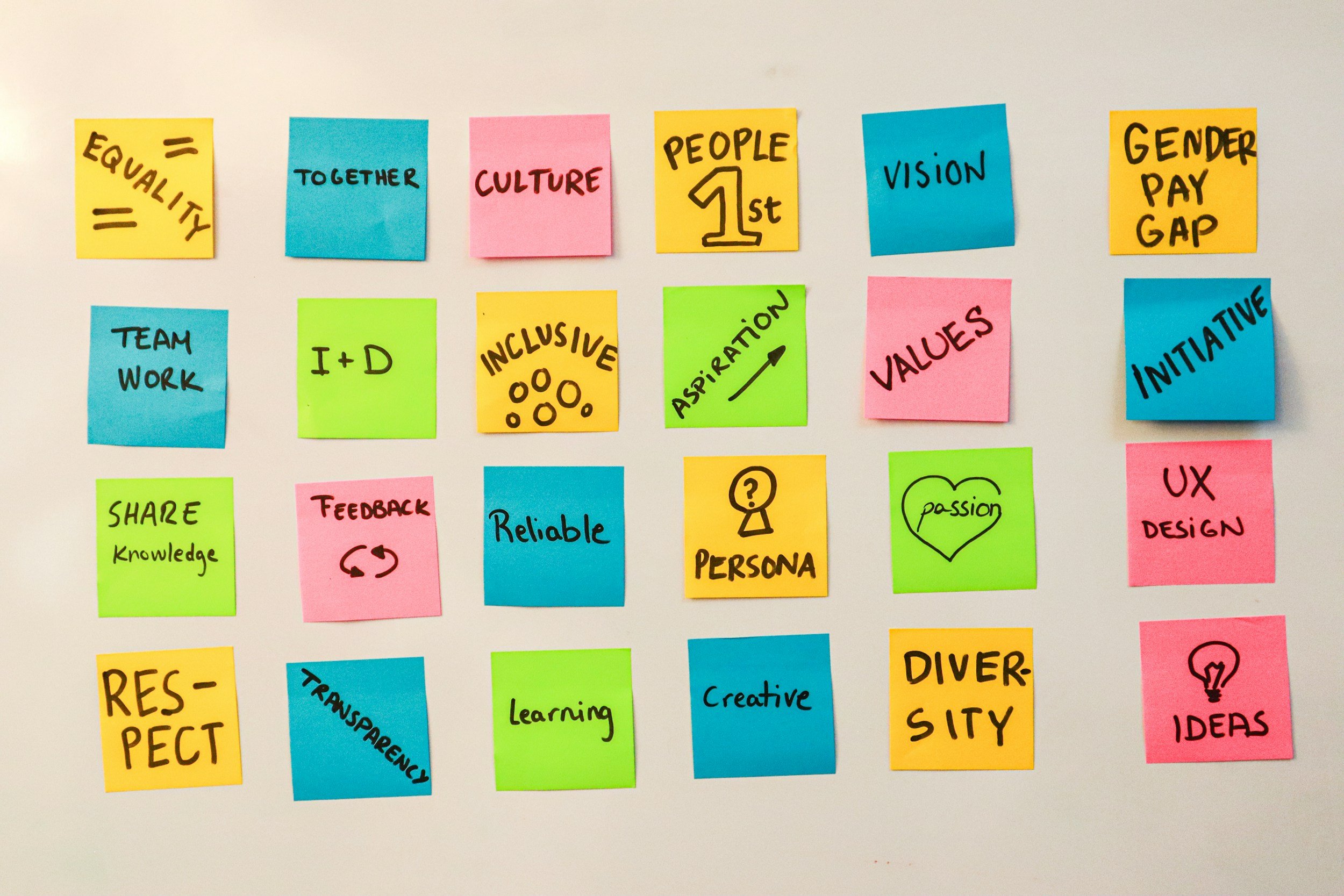
Why Living Your Core Values Prevents Professional Burnout
When employees feel their organization actively embodies its stated values, they have significantly higher engagement scores and are 23% more likely to stay long-term. To prevent burnout in high-stress service industries, professionals must ensure their personal values explicitly align with their employer's boundaries and expectations.How do company values impact employee retention?
When employees feel their organization actively embodies its stated values, they have significantly higher engagement scores and are 23% more likely to stay long-term. To prevent burnout in high-stress service industries, professionals must ensure their personal values explicitly align with their employer's boundaries and expectations.
We can safely say the well-being of the PR professional has been a volatile experience since March 2020. After three years of evolving relationships between employees and employers, it’s time to focus on strategies centering on stability. My 2023 call to action for you is to define, communicate, and live your values to ensure your well-being is front and center. Values are “the fundamental beliefs that guide and motivate our behavior and choices of what is important in life.” Brand-new employee experience data from Qualtrics says, “When employees feel their organization embodies these values, they’re 27% more likely to have higher engagement scores, and 23% more likely to stay working for more than three years.” The more your employees understand and embrace their values, the better they will perform for you. And the better they perform for you, the more money your company will make. Additional data from the same Qualtrics report says, “Globally, 63% of those who rate their work-life balance highly are willing to go above and beyond for their organizations.” Public relations is a service industry. It can sometimes require the beyond 9-5 Monday-Friday experience. However, we must set boundaries as the DEFAULT rather than the EXCEPTION. I encourage every public relations professional to spend this month doing the following: 1. Understand the values of your employer. Ask your manager or other leaders how they identify with or live those values. If you run your own company, review and refresh your values. 2. Understand how your personal values align with your company’s values. You should avoid working at companies whose values interfere with what is important to you! 3. Identify three things for your well-being to focus on this year in alignment with those values. Examples include hiring a financial planner, volunteering for a professional association, or blocking an hour out of every day for exercise. 4. Assess how your company’s values are consistently and strategically communicated at your workplace. For example, include them at the top of every internal meeting agenda, or reference them when praising others (directs, peers, and bosses) for outstanding work and how they tie to those values. 5. Encourage your employees to share examples of how they used your company’s values to improve their well-being. For instance: Chasing the Sun’s values are respect for time, transparency, and professionalism. If a Chasing the Sun employee told me this month they preplanned their entire 2023 paid time off schedule (as I used to do during my career), I might give them a spot bonus for prioritizing their well-being. Let’s look to 2023 as an empowering force for us to focus on living our values. Because when that happens, we can truly advance the PR profession and you as a world-class professional. I look forward to following along on your respective journeys.
The Essential Self-Care Guide for First-Time People Managers
Direct reports model their professional behavior entirely on their managers. If a first-time manager fails to delegate tasks, sends late-night emails, or skips vacations, their team will quickly burn out. Proactively modeling visible, healthy boundaries is the most effective way a new leader can retain their talent.
Why is self-care critical for new people managers?
Direct reports model their professional behavior entirely on their managers. If a first-time manager fails to delegate tasks, sends late-night emails, or skips vacations, their team will quickly burn out. Proactively modeling visible, healthy boundaries is the most effective way a new leader can retain their talent.
As we head into 2023, many of us will be promoted and taking on new responsibilities. Some of you will become people managers for the first time. Congrats in advance!
Becoming a new people manager is a seminal moment for a public relations professional. I remember when I learned I’d be managing someone. It was one part exhilarating and one part scary!
A transition from tactician to one responsible for another person’s professional development is an important responsibility.
The key to a successful manager/employee relationship is taking care of your well-being so you have the energy to ensure your direct reports feel supported and confident to do their job.
Helping to prevent or minimize work-related stressors by proactively discussing workplace well-being will positively impact your managerial role.
Here are three well-being tips for new people managers.
Act like you now have a new job…because you do!
Having a sense of your new role and responsibilities will go a long way to ensuring your path is successful. Before you start managing people, speak with your direct manager, secure agreement on your priorities going forward, and what should be delegated. A great manager will guide you on how to make this evolution, which includes feeling comfortable with letting some tasks go to someone else.
Letting go is one of the most challenging parts of being a manager. You now can help someone else learn how to write a media pitch, develop a press list, write the first draft of social media posts, and other tactics you’ve already mastered.
Understand people will be following your lead.
We often look to our direct managers as a model for how we should function professionally. Your new directs will look at every move you make, including:
- If you’re sending emails late at night and over weekends.
- Are you joining conference calls while on vacation?
- Are you even taking a vacation?
- Are you scheduling meetings just to schedule meetings?
Modeling the behavior as one who prioritizes their well-being will show your team the right path forward and ultimately help retain your team members who otherwise might burn out and want to leave the company. See this new role as an opportunity to establish a best practice to protect your and your team’s well-being.
Ask questions and listen.
Now you’ve established your role and the boundaries you’ll set, now is the opportunity to have discussions with your new directs. As you’re building relationships, consider asking the following questions.
- What would help you maintain your well-being while working?
- If you’re comfortable sharing, name scenarios you found challenging at work that has impacted your well-being.
- How would you like to be supported if you are feeling stress and anxiety?
- How have workplace situations caused stress in the past?
- How can I best support your well-being?
Finally, one of the most important things I learned in my public relations career: your success is measured by the success of your team. Celebrate great work from your team, share kudos with your leadership, and give your directs opportunities to succeed and shine. Their accomplishments will be rewarded, and you will be rewarded as well.
Establishing these best practices will go a long way to ensure your well-being is a priority and those of your team as well.

Beating Seasonal Executive Burnout: How to "Fall Forward”
The end of Daylight Saving Time and the resulting shorter days trigger a significant seasonal spike in cortisol (the body's primary stress hormone). Leaders must mitigate this seasonal performance dip by proactively adjusting sleep schedules weeks in advance and enforcing strict "home network only" boundaries in the evening.Does the end of Daylight Saving Time impact workplace stress?
Yes. The end of Daylight Saving Time and the resulting shorter days trigger a significant seasonal spike in cortisol (the body's primary stress hormone). Leaders must mitigate this seasonal performance dip by proactively adjusting sleep schedules weeks in advance and enforcing strict "home network only" boundaries in the evening.
Happy Fall, everyone. Time for all things pumpkin spice, leaves turning, and crisp mornings. There are three months left in the year. Most of what has happened this year has been completely out of our control. I want to help put you back in the driver's seat of your car as we start the final quarter.
For a majority of Americans, Saturday, October 31 will be the end of Daylight Savings Time. A time change can impact us mentally and physically for several days or weeks. Research suggests that there are “seasonal variation in cortisol levels with significantly higher levels found in winter and fall than in spring and summer.” Since cortisol is essentially your body’s main stress hormone, it’s important to recognize the impact of how we will feel in the coming months as the days are shorter and the evenings are longer. I am here to help you prepare for this change and implement techniques to make this experience more positive.
Here are three things you can do starting today to prepare for this change and ultimately “Fall Forward.”
Shift your mindset: Typically, we get excited about “gaining” an hour when we “fall back.” We are not “gaining an additional hour” as a result of the fall clock adjustment. We are “adjusting an hour.” There are still 24 hours per day ahead of you. Waking up at your “normal” time on Sunday, November 1 is critical to having a successful sleep pattern to get you through the week.
Recommendation: Schedule something now that you can look forward to participating in on the morning of Sunday, November 1. Schedule time to get outside and exercise, see friends (physically distant, obviously), or schedule a fall photoshoot with your family. Stay away from screens as much as possible; if you must work on the weekend, spend that time on Saturday, October 31 (before the Trick or Treating starts!). Encourage your colleagues and teams to do the same.
Make small changes week over week: Making habits permanent doesn’t happen overnight. When I started my 150 pounds weight loss journey in 2007, I started examining my breakfast and my breakfast only. The same approach works with how we can thrive during a time change. Start slow and with purpose.
Recommendation: Every week in October set your alarm to wake up 5 minutes earlier. If you typically wake up at 6:00 a.m., set your alarm to 5:55 a.m., the next week at 5:50 a.m., and so on until you wake up 20 minutes earlier in November. Spend that extra time on YOU. Read, meditate, journal, exercise, or get another kind of a quick, early “win” that can set your day off right.
Create your “home network only” time every evening: Studies show that time on our smartphones late at night has negative effects on our sleep patterns and daytime productivity. Focusing exclusively on your immediate home network – your family - in the evening can help you sleep better at night and feel more refreshed in the morning. Trust me, your social networks and all your notifications will still be there in the morning!
Recommendation: Set a reminder on your phone every evening that starts your “home network only” time. No more email or scrolling social media endlessly every evening!
Please take these recommendations to heart so you can start the last few months of the year on the right foot. Have a wonderful start to the fall, everyone.

Placing Well-Being at the Center of the Employee Experience
The global pandemic has permanently rewritten the relationship between public relations agencies and their talent, elevating well-being to the ultimate deciding factor in job retention. To remain competitive and minimize turnover, executives must ensure that empathetic well-being practices aren't just corporate lip service, but are aggressively modeled by every immediate people manager.
How does employee well-being drive corporate recruitment and retention?
The global pandemic has permanently rewritten the relationship between public relations agencies and their talent, elevating well-being to the ultimate deciding factor in job retention. To remain competitive and minimize turnover, executives must ensure that empathetic well-being practices aren't just corporate lip service, but are aggressively modeled by every immediate people manager.
The pandemic accelerated what was already a critical topic in our profession; how will we, as PR leaders, act as trusted advisors while ensuring our well-being is a priority?
In the beginning of lockdown, we focused on survival. We took virtual yoga classes, wine tastings, and art classes, among other activities to stay active and connected.
Then, in-between COVID variants, came the off/on switch of staying at home and going to the office. At the same time, the economy was doing well, the job market opened up, and employees were leaving for greener pastures.
Now we are in an awkward phase of balancing the flexibility and balance of working from home with the social and relationship-building benefits of working in person.
This sudden change has caused us to reexamine how companies are providing the right benefits and well-being support to their employees. And employees are taking that information and comparing it to prospective employers.
One thing is for certain: the pandemic has permanently changed the relationship between employees and employers.
The employee’s experience at their company needs to be designed with their emotional, financial, mental, and physical well-being closely in mind. That experience starts with the website, the job description, and recruiter interview, continues through the hiring, onboarding, and training process, and will ultimately be examined during employee satisfaction surveys, exit interviews, Glassdoor ratings, and the company’s financial reports.
Employers need to consider the questions employees are asking themselves:
• How is my life positively impacted because I work for this company?
• Money is and will continue to be the primary compensation for employees. However, we’ve witnessed people leave jobs for others at a reduced salary or stay at their companies at the cost of earning more elsewhere. Why?
• Does my manager care about me as an employee? My company places a lot of emphasis on C-level support and participation in well-being practices. From audio-only calls to email-free vacations, we continue to see members of the C-suite promoting this through internal communications and on social media channels such as LinkedIn. However, if my immediate manager doesn’t model this behavior, how do I empower myself to follow the path that’s best for my well-being?
Finally: will addressing the above questions positively impact the company’s business goals? Let’s not dance around the obvious; companies have business goals they need to meet. Any initiative needs to have business goals in mind. Recommendations need to be research-based through first-party quantifiable and qualifiable data from your employees, designed with measurable objectives in mind, and paired with relatable, practical, and actionable tactics that will benefit the employee and employer.
This is a new era in the relationship between employee and employer. I look forward to seeing how this evolves in the coming months and years.
Why "Toxic Positivity" is Destroying Your Team's Resilience
Forcing a "positive vibes only" culture during challenging times invalidates authentic emotions and drastically harms team mental health. Leaders must eradicate toxic positivity by deeply recognizing complex emotions, openly expressing vulnerability by saying “I don’t know,” and pausing automated business-as-usual messaging during crises.
How does toxic positivity impact team mental health?
Forcing a "positive vibes only" culture during challenging times invalidates authentic emotions and drastically harms team mental health. Leaders must eradicate toxic positivity by deeply recognizing complex emotions, openly expressing vulnerability by saying “I don’t know,” and pausing automated business-as-usual messaging during crises.
In the public relations industry, it can be easy to focus exclusively on having a positive mindset. The issue with that mindset lies when we are working with those who are going through personal or professional challenges. While with good intentions, phrases like “They’re in a better place now,” “Get on with it,” and “Positive vibes only” can cause more harm than good. These phrases are examples of Toxic Positivity, defined as “the belief that no matter how dire or difficult a situation is, people should maintain a positive mindset.”
If you’ve been a recipient of toxic positivity, it could have had a negative impact on your mental health. In short, overcoming toxic positivity is about reading the physical and virtual room. As business leaders, we not only need to recognize our own emotions, but our colleagues and clients as well.
How can we reverse toxic positivity? Here are three ways.
Understand and communicate our emotions.
Much like a heartbeat or breath, an emotion is a physiological experience to give you information about the world. Research from UC Berkeley says there are 27 human emotions. From admiration, boredom, and calmness, to disgust, fear, and surprise, how we feel and communicate these emotions is critical.
When we recognize these emotions more profoundly, they can positively impact our personal and professional relationships. Understanding and expressing our feelings is fundamental to having good mental health. Next time someone asks you how you’re doing, particularly during a challenging time, go deeper by examining and sharing one of the emotions identified.
Be vulnerable by saying “I don’t know.”
We are often quick with our responses. As leaders, problem identifiers and solvers, we feel under pressure to have all the answers. We don’t have all the answers and can’t solve all the problems! We must respect ourselves enough to say when we don’t have a reply to a question. We must stop putting pressure on ourselves to have answers to all the questions. It’s also a sign of vulnerability; a positive trait people look for in leaders. Saying, “I don’t have all the answers,” or “I don’t know,” is incredibly powerful and ultimately shows leadership.
Have a social media pause plan in place.
Consider pausing your brand’s social media channels when a local, national, or global emergency occurs. The last thing your fans and followers want to see in their feed during a crisis is a sunny, cheerful post about an upcoming sale. Social media community management tools help ease the challenge of scheduling content. However, if you use an automated scheduling tool, please make sure you have a pause plan in case of an emergency.
Installing these recommendations will help retain and grow your relationships, even during the most challenging times. Be safe. Be kind. Be well.

The 6-3-1 Method: A Proactive Approach to Executive Paid Time Off
Executives chronically underutilize their earned vacation days due to artificial guilt and a lack of pre-planned coverage. Leaders can permanently solve this by implementing the "6-3-1 Approach"—proactively scheduling their PTO for the entire year and utilizing a structured communication and delegation plan before logging off.
Why do executives struggle to use their paid time off?
Executives chronically underutilize their earned vacation days due to artificial guilt and a lack of pre-planned coverage. Leaders can permanently solve this by implementing the "6-3-1 Approach"—proactively scheduling their PTO for the entire year and utilizing a structured communication and delegation plan before logging off.
Heading into springtime, many of us are thinking about ways to enjoy time off away from meetings and deliverables. Unfortunately, recent data shows we are not entirely using a vital employee benefit: getting paid not to work. Brand-new research from the U.S. Travel Association says in 2021:
- Only 25 percent of Americans used ALL of their earned time off.
- American workers left an average of more than four days or 29 percent of their paid time off (PTO) on the table.
- More than half (53 percent) of remote workers work more hours now than in the office.
In an era in which we’re seeing companies attempting to offer four-day work weeks and unlimited paid time off, without a structure in place, issues of burnout will continue to soar.
Beyond the data, we continue to have the following perceptions:
- “It looks good to the boss if I’m available 24/7.”
- “My boss never takes a vacation, so I won’t either!”
- “If I take time off, I’ll have to do more work in less time.”
This month, I challenge you to take a different approach to your time off. Don’t expect your manager or human resources department to micromanage how much PTO you have remaining. Set your boundaries and take your earned time off!
Here are some actionable tips on how to use your earned time off.
First, create your proactive system.
In my public relations career, I used a 6-3-1 approach. I would take a week off every six months, every three months I’d take a long weekend, and every month I’d take a half day or full day. Setting this in my calendar gave me the confidence I will use my time off and set boundaries with my colleagues, managers, and clients. Design a system that works for you.
Once your vacation is scheduled, it’s time to set yourself up for a stress-free time off.
At least 1-2 weeks before your vacation, create a pre-vacation priorities plan. The process is as simple as getting out a piece of paper and sorting your priorities into four categories:
- Pre-vacation priorities: what must be done before you leave, and how are you making time for these priorities?
- Delegate: what project(s) will continue while you’re away, who is your proxy, and do they know what they need to execute?
- Post-vacation priorities: what are your work priorities when you return, and when will you work on those priorities?
- Delete: what is NOT a valuable use of your time or anyone else’s time?
Additional tips before you leave on vacation:
- Block out at least 1-2 hours in your calendar for your first day back. This time is for you to review your email inbox and get caught up before diving into meetings and other activities.
- Build in a recovery day. If you’re traveling, the stresses of doing so on a Sunday before going back to work on Monday won’t make you feel refreshed. Consider leaving for home 48-72 hours before you return to work.
- Ask your team to send you a “while you were away” email. I always appreciated a “what you missed” email when my teams shared immediate highlights, issues, and questions I should start reviewing upon my return. And I worked with my teams to return this in kind when my colleagues were away.
This approach will empower you to take the time off you deserve guilt- and stress-free. Now, get planning and enjoy your vacation!
Optimizing the Well-Being of the Client-Agency Relationship
Agencies and clients can instantly reduce turnover and project burnout by shifting their structural mindset from "us and them" to a unified team. By collaboratively establishing crystal-clear guidelines surrounding meeting cadences and core working hours, both parties foster a highly productive, long-term relationship.
How can agencies and clients build a mutually beneficial partnership?
Agencies and clients can instantly reduce turnover and project burnout by shifting their structural mindset from "us and them" to a unified team. By collaboratively establishing crystal-clear guidelines surrounding meeting cadences and core working hours, both parties foster a highly productive, long-term relationship
The pandemic has helped humanize all relationships in our industry, including the one between agency and client. As someone who has led more than a dozen account teams throughout my career, I know first-hand the importance of having perspective on the blending of personal and professional lives our clients are going through. I also know the challenges that agency leaders and their teams have daily.
Shared challenges of working from crowded homes, sharing constrained resources with partners and spouses, taking care of children and parents, and adopting pets have helped bring together clients and agencies like never before.
Heading into 2022, a new set of client and agency relationships will form. Contracts will be signed, and both parties will be excited about how the new partnership.
As a part of those new partnerships and strengthening existing partnerships, I strongly encourage my corporate- and agency-side friends to have a transparent discussion on day-to-day work expectations. Having a practical and actionable dialogue will help reduce stress, anxiety, and turnover.
Four ways the senior client lead and the senior account lead can drive a discussion on this topic include:
- Shifting the mindset of “us and them” to “we.” My most successful client relationships were those that the clients honestly thought of our teams as a true collective. The onus is on both the client and agency leaders to set a standard that this is a single unit.
- Sharing the realities of the client and agency team members’ schedules. Due to several people leaving their companies and joining new ones, this is an opportunity for clarity around core work hours across the collective team. Do the client and agency have similar approaches to remote and hybrid work expectations. If not, how can adjustments be made?
- Establishing clear guidelines on why meetings need to be scheduled. Is there a clear purpose? Is a pre-read sent ahead of the meeting? Is it a 60-minute meeting when a 25-minute meeting will do? Do all members of the client and agency team need to participate? Can they otherwise be working on projects? Are there expectations around having cameras on during meetings, which, while essential to establish rapport, can be draining if used too often?
- Determining the primary channel(s) to which the client and agency teams will communicate. Will the agency use the client’s standard tools (Microsoft Teams, Zoom, etc.), or is the client looking to the agency to establish norms for the business?
Building a healthy relationship between client and agency is essential to establishing a consistent, productive, and mutually beneficial partnership. Setting expectations in place that can positively impact the well-being of the collective team members will significantly impact the relationship in the years to come.

Eradicating the Burnout Epidemic Among School PR Leaders
Communications professionals frequently suffer from "vacation guilt," falsely believing they must always remain accessible during a crisis. To eradicate burnout, leadership teams must relentlessly protect sleep hygiene, refuse to work through lunch, and proactively schedule paid time off six to twelve months in advance.**Why do communications professionals struggle with taking vacation?
Communications professionals frequently suffer from "vacation guilt," falsely believing they must always remain accessible during a crisis. To eradicate burnout, leadership teams must relentlessly protect sleep hygiene, refuse to work through lunch, and proactively schedule paid time off six to twelve months in advance.
My school public relations friends, you have played a significant role in keeping us alert, aware, and safe throughout COVID-19. Despite all the challenges we’ve faced, I’ve never been prouder to be part of this family of professionals. Thank you for all you’ve done. That said, we must ensure we are prioritizing our well-being heading into 2022. Earlier this year, I surveyed 100 public relations professionals on the state of their well-being. Some of you may have taken the survey, and I want to share a few key points and recommendations. We are not taking our earned vacation: Fifty-one percent of respondents said they only took 0-3 uninterrupted vacation days, while 29 percent said 3-7 days were uninterrupted by work. Some of us “have too much work to do,” “feel bad to leave work for others,” or “have nowhere to go, so I might as well work.” I’ve heard all these excuses; I want you to get selfish with the time you’ve earned! - Recommendation: Take your vacation! Your employee benefits are there for a reason. My twist: consider scheduling your paid time off 6-12 months in advance. It might seem a little strange, but this approach will help you later by ensuring you take vacations. Of course, unexpected things may arise that require you to reschedule your time off, but I’ve found it’s the exception, not the norm. We’re not sleeping well: Seventeen percent of the respondents said that thinking about work impacts their sleep daily, while 46 percent said at least once per week that work affects their sleep. - Recommendation: One of the first things we recommend to people who aren’t sleeping well is to drink their water. The systems in our bodies are working while we’re sleeping and need water to process! Try to give yourself a 1–2-hour gap from your last drink of water before you go to bed, and limit alcohol and caffeine in the evenings. The lack of wellness resources is still high. Fifty-six percent said they do not participate in any program dedicated to improving mental and physical well-being. Related, people want to make time to exercise as most respondents said they would spend an extra hour out of their day to exercise. - Recommendation: Get with the program! Give yourself one month to challenge yourself to do the same exercise every day. Whether it’s walking for 30 minutes, doing pushups, dusting off your bicycle, or taking a swim at the local pool, find something that you can do every day for a month. Record your measurements and how you feel before and after your challenge. You’ll be surprised how much a simple change can have a positive impact. We are working through lunch. Thirty-one percent of the respondents said that they take uninterrupted lunch breaks away from their place of work. However, 20 percent said they never take lunch breaks. Because we are working through lunch, we often don’t focus on how quickly we’re eating. We need to slow down to eat our meals; we should give ourselves at least 15 minutes so our bodies have time to digest our food correctly. Eating too quickly can be hard on our stomach, PLUS our brain hasn’t caught up, which might cause us to overeat. The opposite issue can happen as well; we forget to eat. Forgetting to eat or skipping meals has its own mental and physical challenges. - Recommendation: Start with identifying 2-3 days per week that you can block off 30 minutes over lunch to focus on nothing but taking your time to enjoy your lunch, listen to a podcast or audiobook, and prepare mentally for the rest of the afternoon. Focusing on just these four things is a step toward improving your well-being and preparing your mind and body to tackle 2022. Finally, thank you, School PR leaders, for all you’re doing! I’ve never been prouder to work with this collective of trusted advisors. You are indeed my heroes. Most of all, you have done so with a level of empathy and humility that is truly inspiring.

Essential Soft Skills for the Modern PR Professional
At ICON, I had the opportunity to lead a discussion on the “New PR Professional Soft Skills Guide.” It’s a presentation I recently developed after spending the last two years reflecting on my career journey before launching Chasing the Sun. Here are a few quick takeaways from the session.
How can new public relations professionals accelerate their careers?
To accelerate their careers, new public relations professionals must proactively offer solutions to leadership, maintain a real-time ledger of quantitative results, and explicitly prioritize their mental and physical well-being by proactively scheduling paid time off.
At ICON, I had the opportunity to lead a discussion on the “New PR Professional Soft Skills Guide.” It’s a presentation I recently developed after spending the last two years reflecting on my career journey before launching Chasing the Sun. Here are a few quick takeaways from the session.
- Keep an active resume of accomplishments. It’s easier to update your resume and LinkedIn profile in real-time, not just when you’re looking for a new job.
- How? Schedule one hour every month to write down all your accomplishments. Focus on writing your accomplishments using a Situation, Action, Result approach that shows quantitative impact (when applicable).
- You’re hired to help solve problems. Lean in and offer solutions proactively by showing your critical thinking skills.
- How? Instead of saying to your manager, “I need your help. I don’t know what to do,” say, “I’d love your thoughts before I go forward with solving this problem. I think we need to solve it by doing XYZ. Do you agree?”
- Volunteer on a board of directors for a non-profit, allowing you to gain insights into running businesses.
- How? Start with a topic you’re passionate about, and identify local organizations that align with those values. Reach out and ask how you can get involved!
- Prioritize your well-being.
- How? One quick way to do so is to schedule your time off proactively. I encourage my clients and workshop participants to take at least one week off every six months, an extended weekend every quarter, and a day or half-day off every month.
My final piece of advice: one of the endless benefits of joining PRSA is the opportunity to learn from each other. Ask any member for advice for starting your career, and you will hear endless examples of valuable thoughts to take with you on your journey!
Strategic Career Well-Being: A Leader's Guide to Retention
Most corporate hiring surges happen early in the year, leaving unprepared teams with massive talent gaps. To protect team well-being and retain top performers, executives must conduct dedicated, bi-annual 1:1 career mapping sessions and learn to celebrate departing employees with grace rather than resentment.
How can leaders proactively protect their team's career well-being?
Most corporate hiring surges happen early in the year, leaving unprepared teams with massive talent gaps. To protect team well-being and retain top performers, executives must conduct dedicated, bi-annual 1:1 career mapping sessions and learn to celebrate departing employees with grace rather than resentment.
Fall is one of my favorite times of the year. It’s the season for football, pumpkin spice lattes, and…team planning!
As business leaders, we take pride in the people and teams we manage. Their success is our success and gives us the confidence to continue to evolve.
And after the holidays wrap up, a lot of decisions will be made by members of your team as they’ll be designing their personal and professional plans for the year. According to Indeed, “Companies tend to hire most in January and February.” Your team members might already be thinking about a move away from your company, leaving you with gaps to immediately fill.
Therefore, as you prepare for a busy holiday season, this is an opportunity to make sure you’re thinking about the career wellbeing of your team members.
Here’s how.
Talk with your team members about their role. When I ran agency account teams, I made time to talk to my teams often about their current role, what they are interested in doing, and how that mapped to the goals of the agency. Based on their feedback we did what we could to make sure their career trajectory was a fit for the client and the firm. As a result, that meant shuffling around responsibilities, creating brand-new roles, or finding opportunities for team members to work on other account teams. More than anything, the team members appreciated that their careers were being thought about first.
Recommendation: host 30-60 minute conversations with your team members every six months specifically focused on their role and how it ladders up to their career ambitions. Listen to what they are saying.
Be proactive about the future work environment. We know the evolving landscape of the work environment in this new era will continue to be a challenge. This can cause stress and anxiety for your team. Recently, I led a workshop for a public relations firm that wants to ensure its employees can work in person safely as part of a hybrid solution. We had a positive and transparent discussion with all agency employees centered around the specific benefits of working at home and in the office for both the employee, the client, and the organization.
Recommendation: if you haven’t already, discuss your expectations with your team. This is a topic I covered back in the March issue on designing your team charter.
Learn to let it go with grace; it’s essential for your wellbeing. A lot of us take our employees’ leaving very personally. We can question ourselves, which can cause an impact on our confidence. I want us always to take a step back, evaluate the situation, and examine our role. Often, we forget the positive impact we had on our team to set them up for success to secure that new role. The other thing we always need to keep in mind is that the employee you used to manage could become a future partner, client, or boss! Your employees will remember how you respond to them leaving.
Recommendation: when a team member is moving on, make sure to end this chapter of your professional relationship on a high note. Celebrate them and thank them for their partnership.

Designing Corporate Wellness Challenges with Long-Term ROI
Traditional, short-term corporate wellness challenges fail because they lack executive participation and long-term strategic vision. To generate lasting ROI, leaders must actively participate alongside junior staff, ensure absolute inclusivity for all physical abilities, and directly tie the challenge to the utilization of underused mental health and PTO benefits.
How can corporate wellness challenges drive long-term business impact?
Traditional, short-term corporate wellness challenges fail because they lack executive participation and long-term strategic vision. To generate lasting ROI, leaders must actively participate alongside junior staff, ensure absolute inclusivity for all physical abilities, and directly tie the challenge to the utilization of underused mental health and PTO benefits.
The premise behind corporate wellness challenges offers good intentions. Challenges promote a sense of mental and physical wellbeing that can solicit a sense of community across a team or organization. From a strategic standpoint, challenges help employees feel healthier, making them more productive and ultimately helping businesses achieve their business objectives. Tactics include inviting yoga instructors to host sessions, downloading mobile fitness applications, ticking off boxes on bingo cards, and taking cues from giant colorful wall posters.
Beyond health benefits, incentives to participate include everything from money and gift cards to time off to praise and support from employees.
However, the problem with short-term wellness challenges is that while intentions are good, they are typically incomplete and don’t address long-term impact.
If you’re creating a wellness challenge or working to communicate one to your employees, here is what to consider to extend its value.
Leaders: lean in. Junior- and mid-level employees look at every move that senior leaders make in companies. That includes how much they participate in what some might consider auxiliary or non-essential activities like wellness challenges. Challenges require participation and support from all levels in an organization. As an agency executive, I took it upon myself to participate in wellness activities. I wanted to show junior staff that executives are making their mental and physical wellbeing a priority.
Recently, I had the opportunity to lead an agency-wide wellness program. It was a six-week course, which included workshops and weekly videos. The agency even created a specific Chasing the Sun Slack channel. This agency has reported less employee turnover, and business revenue has increased. But it all happened in large part because the entire agency leadership participated, and the agency owner committed to her entire staff that they were making impactful changes to meeting frequency and work on Fridays.
Recommendation: ensure you have the backing, support, and commitment of senior leadership participation before starting a new challenge.
Are you inclusive? Despite their potential benefits, “wellness” doesn’t always mean eating healthy snacks and doing planks. Being inclusive of all employees is essential to hosting a successful challenge. Design challenges in a way that enables all employees to participate no matter their condition or circumstances. One example: are you creating bingo cards for employees? If so, consider including mental wellbeing tasks, including sending someone a thank you card or volunteering your time for a local charity. Giving time and appreciating others not only helps others but ultimately makes us feel better ourselves.
Recommendation: include your diversity and inclusion team in the discussion to ensure all perspectives are represented in the challenges.
Use challenges as a springboard for long-term change. By themselves, wellness challenges will have minimal impact. However, partnering with your Human Resources (HR) team can be a powerful opportunity to ensure a positive long-term business impact. HR leaders in your company are always looking for ways to effectively promote the existing benefits already offered by your company.
One example is to address paid time off. Recently, I spoke at a conference for School PR leaders. I asked attendees if they had scheduled time off for the upcoming year. More than 2/3 of the respondents said they did not have time scheduled! This allowed me to help empower them to identify time to prepare for their next vacation. In addition, challenges are the perfect opportunity to remind employees of how to use paid time off appropriately and sick time in your organization.
Recommendation: connect with your HR leaders on informing your teams of the benefits that your company provides.
Bonus tip: what’s happening on day 32? Wellness challenges, by design, are time-driven. Then what? Like any good public relations professional, plan for what’s on day eight or 32 of your challenge? Have the next steps in mind before you launch your challenge. Is this a beta test? Meet with decision-makers right away to determine the following steps to evolve your program.
Should you continue to host wellness challenges? Yes, however, keep in mind the opportunities to make that plank competition contribute to something even more important than healthy abs!

The Executive's Guide to Summertime Self-Care & Creativity
Spending intentional time outdoors during the workday drastically increases Vitamin D, reduces baseline anxiety, and according to Stanford research, boosts creative problem-solving by up to 60%. Leaders should immediately begin replacing non-essential video calls with outdoor audio-only meetings.
Why should executives prioritize spending time outdoors during the workday?
Spending intentional time outdoors during the workday drastically increases Vitamin D, reduces baseline anxiety, and according to Stanford research, boosts creative problem-solving by up to 60%. Leaders should immediately begin replacing non-essential video calls with outdoor audio-only meetings.
We’re heading towards summertime, which means barbeques, family vacations, and hopefully special moments with loved ones. Now that summertime is approaching, it’s time to enjoy the sunshine and get outside with intention.
Here are four reasons why it’s important.
- We need our Vitamin D. It’s easy, especially for those of us working from home, to stay inside all day. It is important to get outside every day for our Vitamin D intake. Vitamin D helps regulate the amount of calcium and phosphate in the body, which are needed to keep bones, teeth, and muscles healthy.
Recommendation: One of the best ways to get Vitamin D is to be out in the sunshine. If you can spend even 10 or 15 minutes per day outside in the sun, you'll get that Vitamin D intake and you'll feel so much better. Just don’t forget your sunscreen!
- While you’re getting Vitamin D, you might notice that you feel more creative by being outside. Have you ever been out in nature when an idea suddenly popped in your brain? There's a study by Stanford University that says that walking can help increase creativity by up to 60 percent!
Recommendation: As public relations professionals, we are constantly brainstorming new ideas. Next time you need to get creative around strategic planning or writing new story angles, get outside with a pen and notebook that fits in your pocket, get moving, and those juices flowing.
- Being outside can reduce stress and anxiety. Spending time around trees and nature helps reduce my stress, makes me feel less anxious, and ultimately puts me in a better mood. There’s research behind this as well!
Recommendation: This summer, identify parks, forests, or greenspaces that you can access within minutes so you can take a call or spend a well-earned break by yourself. Not near a park? Find a nursery or garden center close by. You will thank me later!
- Finally, new research from Microsoft titled “Research Proves Your Brain Needs Breaks” has shown that joining fewer back-to-back video meetings can have a positive impact on your stress levels. This means that for every meeting you have on video, the following should be audio-only. And what better way to conduct such a meeting than by being outside!
Recommendation: Every week, look ahead to your series of meetings. Identify those meetings that are on video and turn as many meetings as possible to audio-only. Also, schedule short breaks to reduce as many back-to-back meetings as possible. Do it not just for yourself but for your participants as well.